
Mental Health Education • Neurodivergence • Wellbeing • Overlap
Neurodivergence & Mental Health
A gentle guide to understanding how neurodivergent experiences and mental health can interact, overlap and shape wellbeing, support needs, masking, burnout and everyday life.
🌱 Gentle Information Notice
Neurodivergence and mental health are both big topics. You do not need to take everything in at once.
You can read one section at a time, pause when needed and come back later. It is okay if some parts feel more relevant to you than others.
💗 Sensitive Topics Note
This page discusses distress, anxiety, low mood, sensory overload, masking, burnout, misunderstanding and support needs.
Please go gently, take breaks if needed and use support pathways if this topic feels emotionally heavy.
📘 Learning, Not Labelling
Aspie Answers provides educational information, lived-experience-informed guidance and practical support ideas. This page is here to help you understand patterns and possibilities — not to force labels onto people.
🩺 Neurodivergence Is Not the Same as Mental Illness
Neurodivergence refers to natural differences in how brains can develop, process, learn, communicate, focus, sense and interact with the world.
A neurodivergent person can also experience mental-health difficulties, but neurodivergence itself is not simply “bad mental health.” This page cannot diagnose any condition.
✨ Inside This Page You Will Learn
This page gives a broad, kind overview so you can understand the connection between neurodivergent experiences and mental wellbeing without needing to know everything immediately.
And why different brains may experience the world in different ways.
Including shared experiences, overlap and co-occurring challenges.
And how they can affect stress, energy and wellbeing.
Especially when people try hard to cope or fit in.
Even between people who share similar labels or traits.
Including support, self-understanding and practical strategies.
👀 At a Glance
Different brains, different needs
Neurodivergent people may process information, emotion, sensory input and daily life differently.
Distress may look different
Mental-health struggles may be missed, misunderstood or mistaken for “just behaviour” or “just personality.”
Environment matters
Sensory demands, expectations, communication barriers and lack of support can increase distress.
Support can help now
Kind, practical support can improve wellbeing even while someone is still figuring things out.

🌿 Where Do I Start?
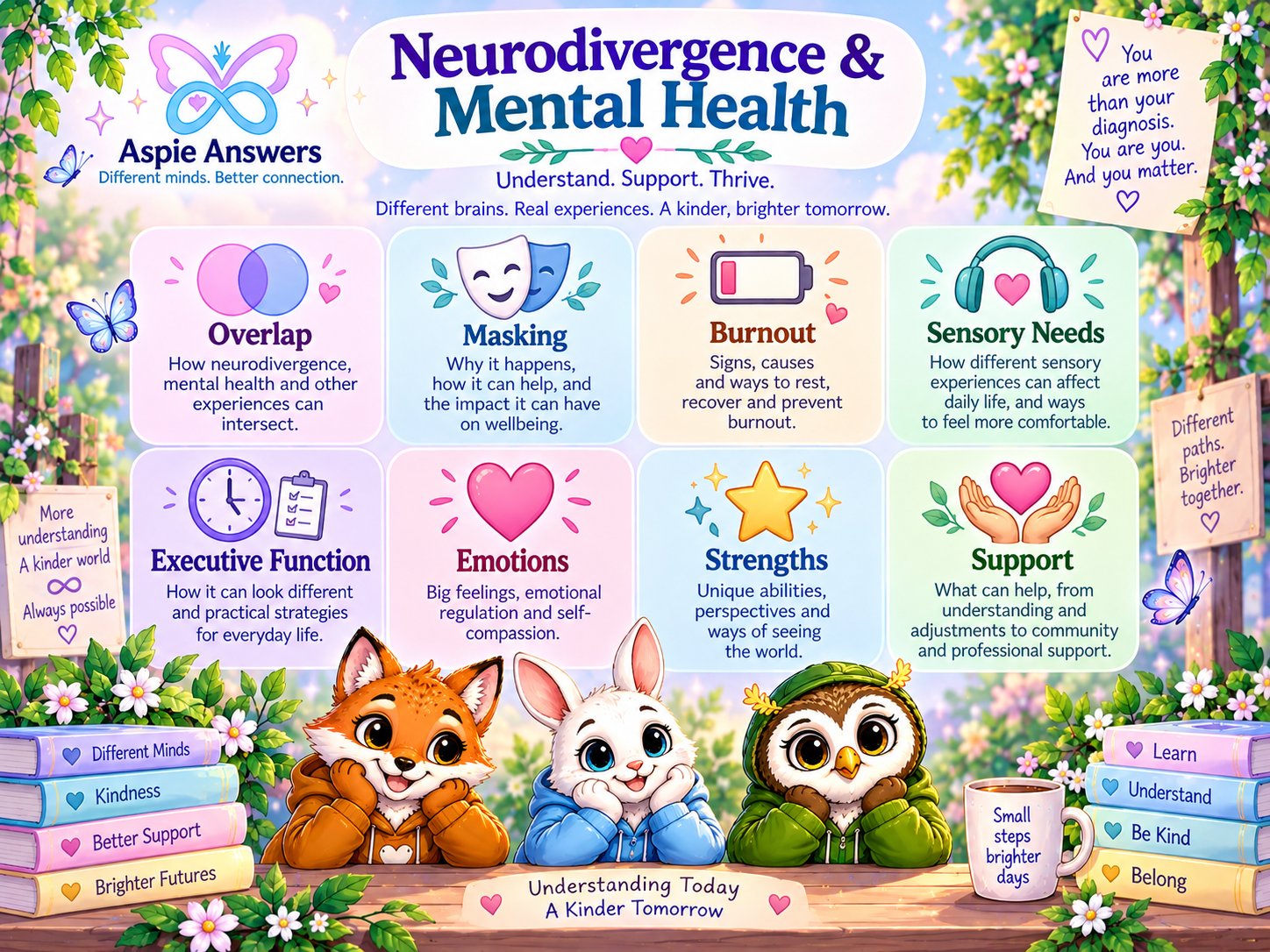
A helpful place to begin is remembering that neurodivergence and mental health are connected, but not the same thing.
Notice the whole picture
Look at patterns across energy, emotions, communication, sensory experiences, routines, relationships and daily life.
Be curious, not harsh
If something feels difficult, that does not mean you are failing. It may mean you need a different kind of support.
Small changes still matter
Rest, sensory adjustments, clearer communication and practical tools can make a real difference to wellbeing.
What Does Neurodivergence Mean?
Neurodivergence is a broad term that recognises that brains do not all work in the same way. People may differ in attention, sensory processing, communication, movement, learning, emotional regulation, memory or social experience.
Some people identify with terms such as autism, ADHD, dyslexia, dyspraxia, Tourette syndrome or other neurodivergent profiles. People may also use broader language while still exploring what fits for them.
Not a defect
Neurodivergence is not simply “wrong” or “broken.” It can bring differences, challenges, strengths and support needs.
Not one single experience
Neurodivergent people are not all the same. Two people with similar labels may still have very different day-to-day needs.
Context matters
A trait may feel manageable in one environment and exhausting in another, depending on support, stress, demands and safety.
🧠🐶🐢 Learn With Buzzy Brain, Scout & Toby Turtle
This page uses an Aspie Answers Companion team to support understanding, emotional wellbeing and pacing. Buzzy Brain helps with executive-function understanding, Scout supports emotional regulation and kindness, and Toby Turtle reminds us to pace, protect energy and prevent burnout.
How Neurodivergence & Mental Health Connect
Neurodivergent people can experience mental-health challenges just like anyone else. At the same time, the way distress is felt, shown or understood may be influenced by sensory needs, communication style, executive-function demands, social pressure, trauma, accessibility barriers and life experiences.
Sometimes a mental-health difficulty is missed because people assume “that is just the person.” Other times, a neurodivergent trait may be mistaken for a mental-health symptom. Sometimes both things are present.
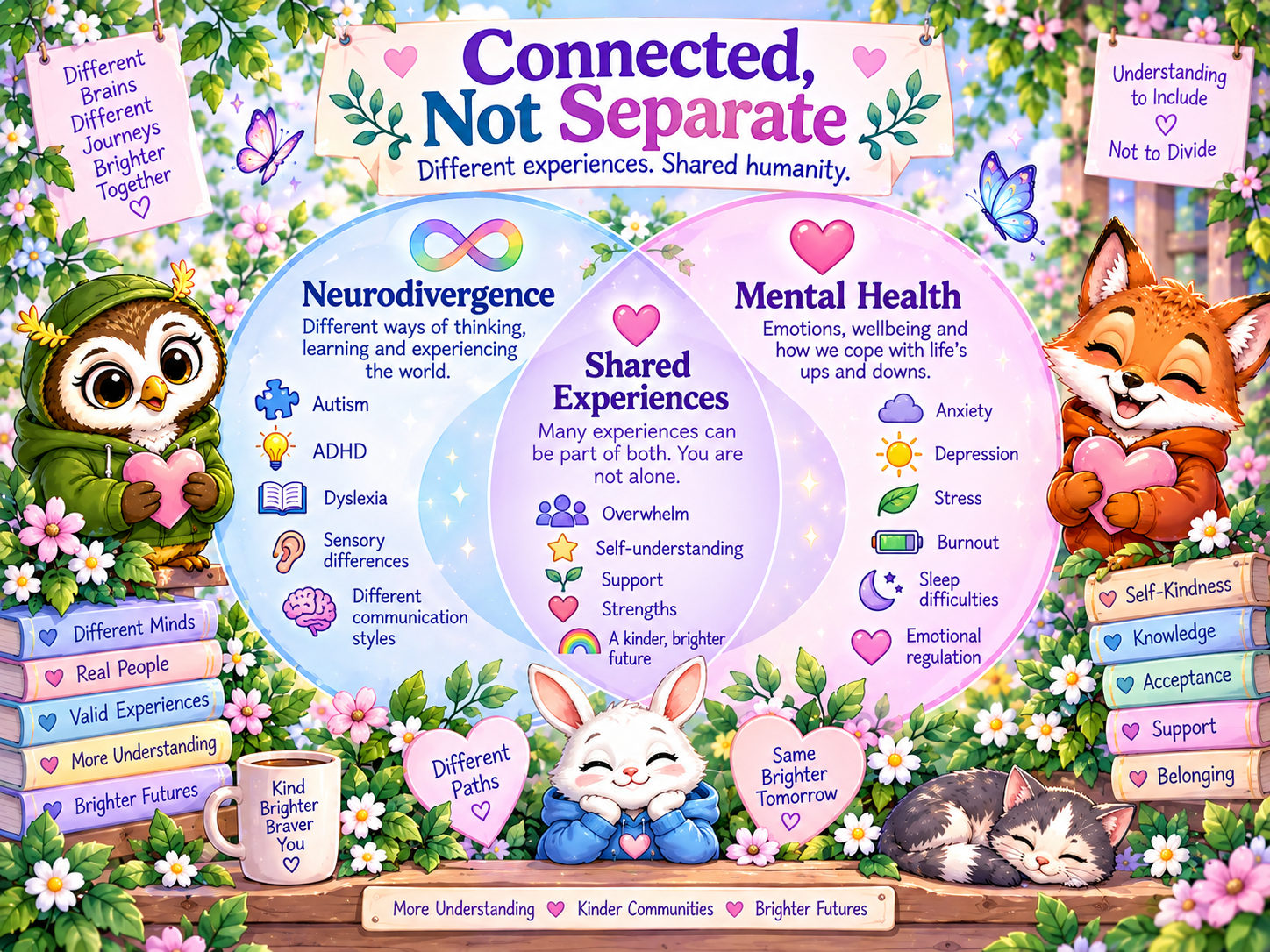
Connected, Not Separate
Neurodivergent people are not separate from the rest of humanity. They may share many of the same feelings, hopes, fears and support needs — while also navigating some experiences differently.

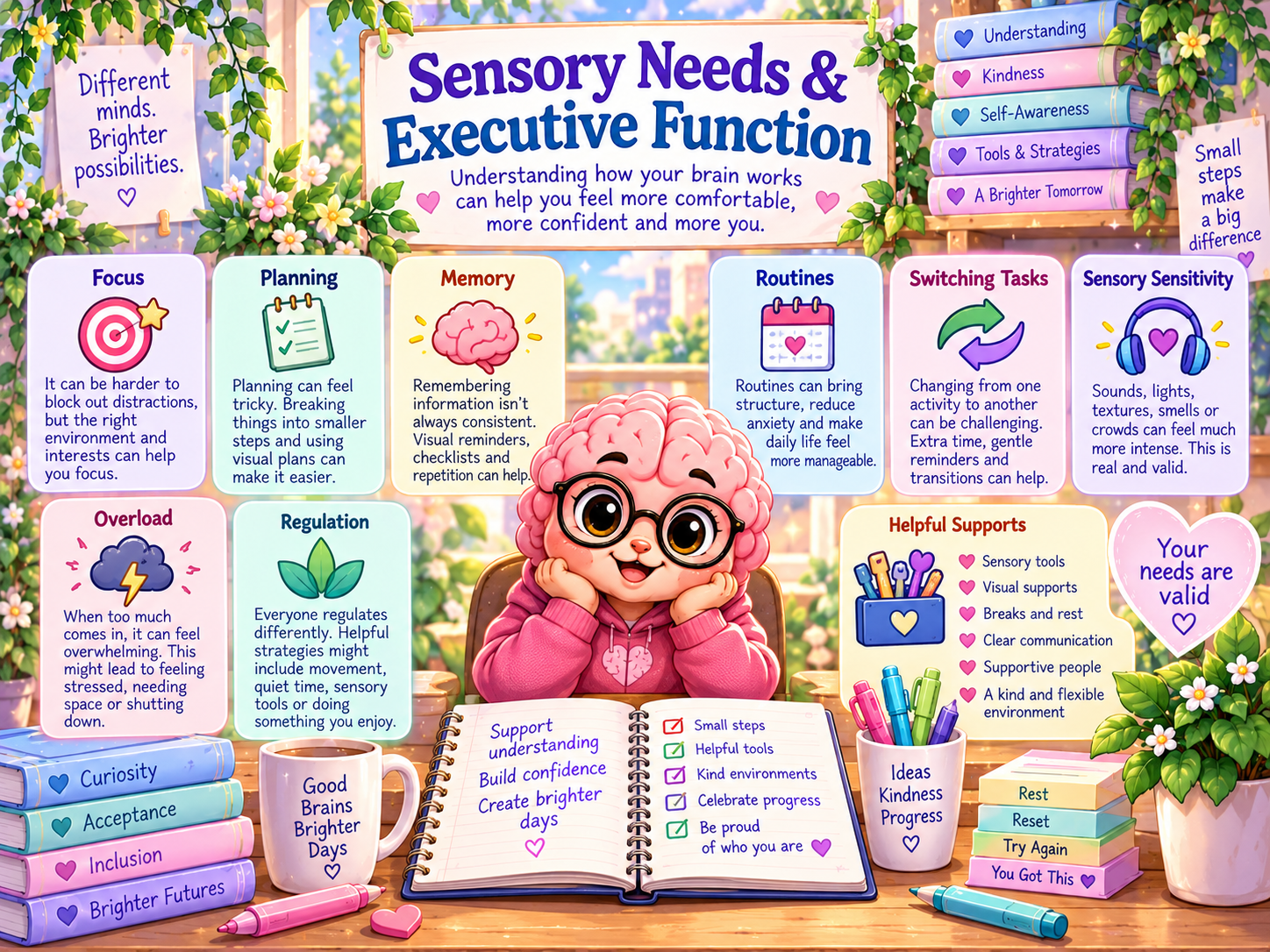
Sensory Needs & Executive Function
Sensory overload, change, unpredictability, task initiation, planning, memory demands, transitions or social pressure can all affect energy, stress and wellbeing.
If these demands pile up, someone may look “anxious,” “shut down,” “unmotivated” or “difficult,” when in reality they may be overwhelmed, exhausted or trying to cope with too much at once.
Masking, Burnout & Recovery
Some neurodivergent people spend a great deal of energy masking, compensating or trying to meet environments that do not fit them well. This can lead to stress, shutdown, overwhelm, anxiety, low mood or burnout.
Burnout is not laziness. It can involve exhaustion, loss of capacity, increased sensitivity, reduced functioning and a need for recovery, safety and pace.
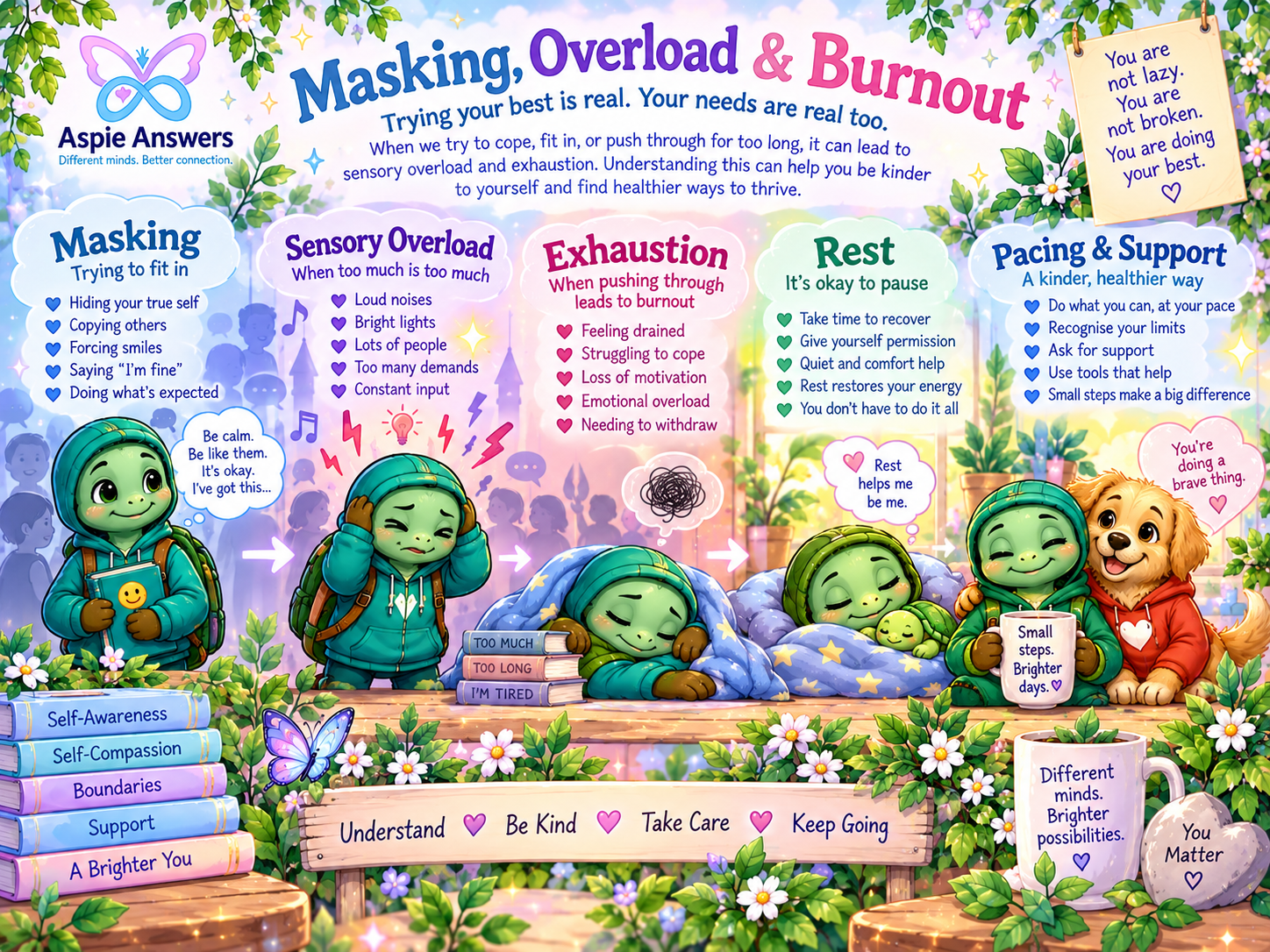
Toby Turtle reminder
Slowing down, reducing overload, resting and protecting energy are valid support strategies — not signs of failure.
Support Needs Can Look Different
Helpful support is not one-size-fits-all. One person may need sensory adjustments, another may need planning tools, another may need emotional support, accessible communication or more flexible expectations.
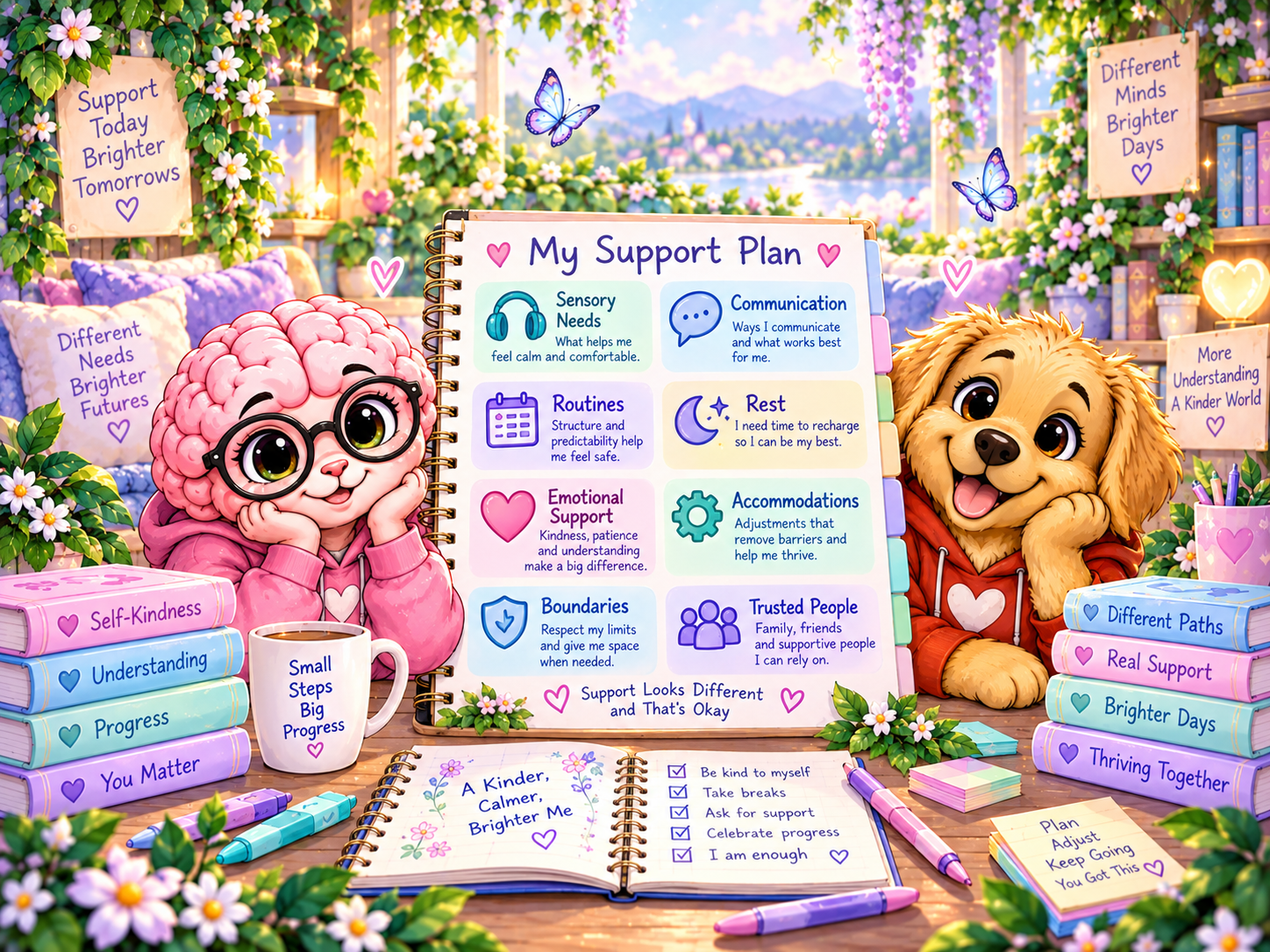
Examples of support needs
- clearer communication
- sensory adjustments
- visual supports or routines
- flexible pacing and rest
- emotional regulation tools
- help with organisation or planning
Support can be both practical and emotional
Good support does not only reduce problems — it can also build confidence, safety, belonging, self-understanding and wellbeing.
Why Recognition Matters
When neurodivergent needs are missed or misunderstood, people may receive criticism instead of support. They may feel ashamed, confused, “too much,” “not enough” or as though they are always falling behind.
Better recognition can support kinder understanding, more helpful strategies and more appropriate pathways for support or assessment.
Read Understanding Symptoms, Diagnosis & Overlap →Wellbeing Is Not Only About Difficulties
Strengths, interests, safe relationships, communication support, accessible environments, identity-affirming spaces, rest, pacing and self-understanding can all help protect mental wellbeing.
Belonging
Feeling accepted and understood can reduce shame and improve emotional safety.
Interests & strengths
Deep interests, creativity, pattern recognition and strong values can all be important parts of wellbeing.
Compassion
Self-kindness and realistic expectations can support recovery better than constant pressure and criticism.

Practical Support & Next Steps
Mental Health Education Hub
Return to the full Mental Health Education pathway for broader learning and connected pages.
Visit the HubMental Health Topics & Conditions
Explore the wider mental-health topic family if you want to go beyond this overview page.
Explore Topics & ConditionsMental Health Topics A–Z
Browse alphabetically if you are looking for a more specific subject or condition.
Browse Topics A–ZContinue Learning
Understanding Symptoms, Diagnosis & Overlap
Revisit the broader page about patterns, overlap, assessment and understanding experiences.
Revisit Previous PageWellbeing, Coping & Emotional Skills
Move into practical emotional wellbeing and coping support in the next learning page.
Continue →Mental Health Literacy
Build confidence understanding mental-health language, systems, support and information.
Explore Mental Health Literacy💜 Different Brains, Different Needs, Shared Humanity
Neurodivergence and mental health do not need to be understood through shame or fear. Kindness, curiosity, support and pacing can open the way to better understanding.
You do not have to force yourself into one story or solve everything today. It is okay to keep learning as you go.
Different minds. Better connection.