

Pasifika Families, Parents & Carers Mental Health Support — NZ
Find culturally responsive information and support for Pacific families, parents, grandparents, kinship carers, extended aiga / kāinga / whānau and people supporting loved ones with mental health needs across New Zealand.
Pacific Peoples are not one single culture or language. Choose pathways that respect your family's community, language, beliefs, consent and preferences.
Start here — family wellbeing and the Pacific context
Family and community connection can be important sources of strength. They can also bring responsibilities, expectations and stress. Support should never assume every family agrees or that a person wants relatives involved. Ask each person how they wish to be supported.
Families may identify with Samoan, Tongan, Cook Islands Māori, Niuean, Tokelauan, Fijian, Tuvaluan, Kiribati and other Pacific communities. Request a preferred language and a suitably qualified interpreter where needed; do not depend on children to interpret sensitive conversations.
Consider family, physical, mental and spiritual wellbeing together where this suits the person. Models such as Fonofale may help some Pacific families but are not a substitute for individual choice or professional assessment.
Family and intergenerational connections
Supporting someone may involve parents, siblings, grandparents, partners, extended family or chosen family. Start with listening, practical support and checking what help is welcome.
Across generations, expectations about emotions, faith, privacy and seeking professional help may differ. Respectful conversations can support understanding without pressure or stigma.


Find support by audience and need
Search the pathways below, or choose a support type and who you're supporting. Planned sibling pages will become available as they are published.
Parents of babies & preschoolers
Postnatal wellbeing, parental stress, early-years routines, caregiver mental health and asking for support.
Explore pathway →Supporting school-age children
Emotional expression, friendships, bullying, learning support and family–school communication.
Explore pathway →Supporting teenagers & youth
Identity, independence, peer pressure, safe conversations, school pressures and appropriate youth support.
Explore pathway →Parents & caregivers
Everyday parenting stress, shared caregiving, blended households and wellbeing plans.
Explore pathway →Grandparents & elders caring for family
Intergenerational roles, caregiving demands, support for matua and elders, and connection.
Explore pathway →Partners, siblings & chosen family
Supporting a loved one while respecting relationships, safety and personal boundaries.
Explore pathway →Family carers of adults
Mental health treatment, emotional support, appointments and sustainable caregiving.
Explore pathway →Caring for older relatives
Older-person mental health, isolation, grief, memory concerns and carers’ needs.
Explore pathway →Carer wellbeing & burnout
Recognising overload, respite discussions, sleep, boundaries, and seeking help for yourself.
Explore pathway →Disability & neurodivergent family support
Autism, ADHD, learning differences, hidden disabilities, disability accommodations and family advocacy.
Explore pathway →Rainbow families & young people
Respectful, affirming support for LGBTQIA+ loved ones without pressuring disclosure.
Explore pathway →Language & communication access
Request Pacific language support, qualified interpreters, plain language and accessible communication.
Explore pathway →Culturally responsive professionals
Find Pacific-led clinicians or culturally responsive counselling, psychology and psychiatric support.
Explore pathway →Family counselling & relationship support
Ask about counselling suitable for your situation, cultural preferences and the person’s consent.
Explore pathway →Community & faith connections
Choose welcoming Pacific community, cultural and faith supports that respect personal choice.
Explore pathway →Rural, regional & online support
Navigation when services are distant, travel is difficult, or online appointments are preferred.
Explore pathway →Assessments & diagnosis
Understand screening, referral, assessments, diagnosis, treatment and second opinions.
Explore pathway →Mental health topics & signs
Learn about anxiety, depression, trauma, grief, sleep, stress, addiction and when to seek assessment.
Explore pathway →Crisis planning & immediate help
Separate everyday wellbeing from urgent danger, safety planning and emergency care.
Explore pathway →Patients’ rights, consent & privacy
Understand informed consent, interpreters, privacy, advocacy, complaints and the NZ Code of Rights.
Explore pathway →Support for educators & professionals
Working alongside Pacific families with permission and culturally safe, accessible communication.
Explore pathway →Crisis support for carers
Help when a parent or carer is overwhelmed or worried about someone’s immediate safety.
Explore pathway →Financial and practical pressures
Ask about social services, work pressures, food or housing stress and local practical help.
Explore pathway →Young adults & family transitions
Leaving school, tertiary study, work, moving away and shifting family responsibilities.
Explore pathway →No matching pathways. Reset the filters or try a different term.


Seeking care for yourself or a loved one
Start with a GP, suitable community mental health service, a Pacific-led provider, or a counsellor if appropriate. Ask how referrals work and whether appointments, interpreters, whānau involvement, online consultations and costs fit your needs.
A family member's involvement should be based on the person's wishes, capacity and applicable consent rules. Healthcare professionals can explain confidentiality and its limits.
Online support, rural families and accessibility
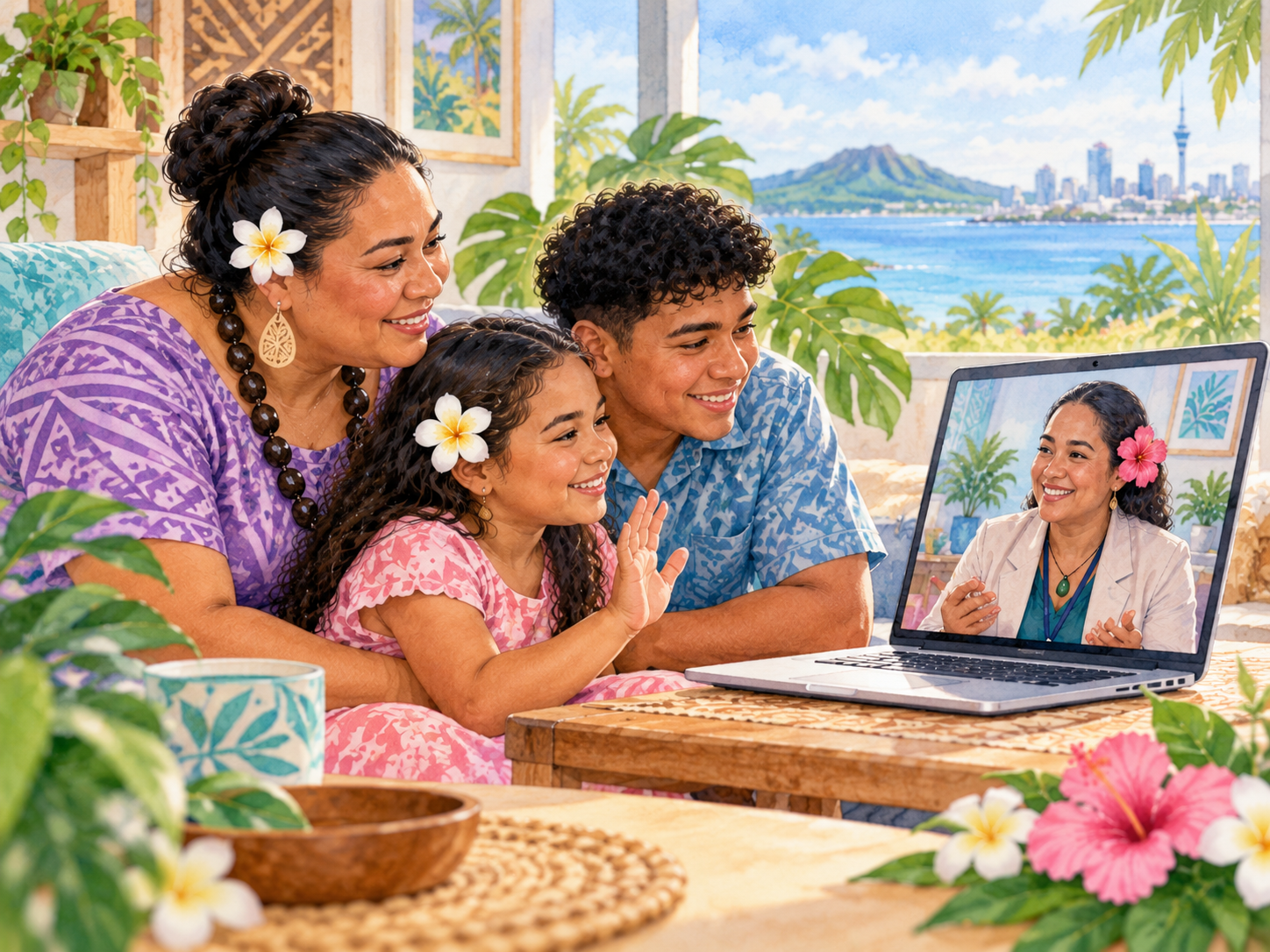
Online care may be useful when distance, transport, mobility or family responsibilities make in-person visits hard. Ask whether the provider is suitable for your age group and can offer privacy, a qualified interpreter, sensory adjustments or alternative communication.
There may be situations where in-person assessment or urgent local support is necessary. A telehealth appointment is not an emergency service.
Pasifika sibling pathways — connected from the first build
These destinations form our agreed Pasifika / Pacific Peoples Mental Health & Wellbeing collection. Some are being built in stages.
Separate crisis pathways:
Urgent support in New Zealand
Immediate danger: call 111. If you need free 24/7 emotional support, call or text 1737 to speak with a trained counsellor. 1737 is not an emergency dispatch service. If you are concerned about violence or immediate safety, seek suitable emergency and local specialist support.
Questions from families and carers
Can we ask to have family members involved?
Yes, ask the service about including family or chosen supporters. The person receiving care should be involved in decisions about consent and information-sharing wherever appropriate.
Can we request support in a Pacific language?
Ask about qualified interpreters, Pacific-led providers and language preferences at the time of booking. Availability varies by region and provider.
What if my child or relative needs an assessment?
A GP or relevant professional may advise on referrals. Mental health assessments and autism/ADHD or learning assessments are not automatically the same process.
Who can support carers themselves?
Carers can ask a GP, counsellor, community provider or local carer support organisation about their own wellbeing, practical help and possible respite options.
What rights do we have?
NZ health and disability services must respect the Code of Rights, including effective communication and informed consent. See the Health and Disability Commissioner for details and advocacy options.