

Goal Setting
Turn hopes and ideas into a practical, flexible career plan that respects your strengths, support needs, energy, circumstances and real life.
Try words such as SMART, motivation, barriers, energy, support or review.
Showing all guide sections.
Before choosing a goal, consider your interests, values, strengths, access needs, preferred environment and available energy. The right goal is one that fits you well enough to be worth pursuing.
Interests
What topics, tasks or problems naturally hold your attention?
Values
What matters most — security, creativity, helping others, flexibility, fairness or growth?
Capacity
What pace, hours, support and sensory environment are realistic right now?
SMART can help turn a vague intention into something you can act on. Adapt the framework to suit your brain, circumstances, support needs and capacity.
What exactly?
How will I notice progress?
Is it possible with support?
Does it matter to me?
When will I review it?


Complete as many fields as feel useful. This tool does not submit your text anywhere; it simply builds the statement on this page while you are using it.
Large goals often become easier when the next step is obvious and small enough to begin. Your action plan can include support, rest and preparation — not only tasks.
- Define the outcome. What would “done enough” look like?
- List the steps. Include research, conversations, travel, documents and recovery time.
- Choose the next step. Pick one action that can realistically be started.
- Add support. Decide who, what tool or what accommodation could help.
- Set a review point. Choose when to check progress without turning it into a threat.
These Companions appear here because their established roles genuinely support planning, manageable action and flexible problem-solving.
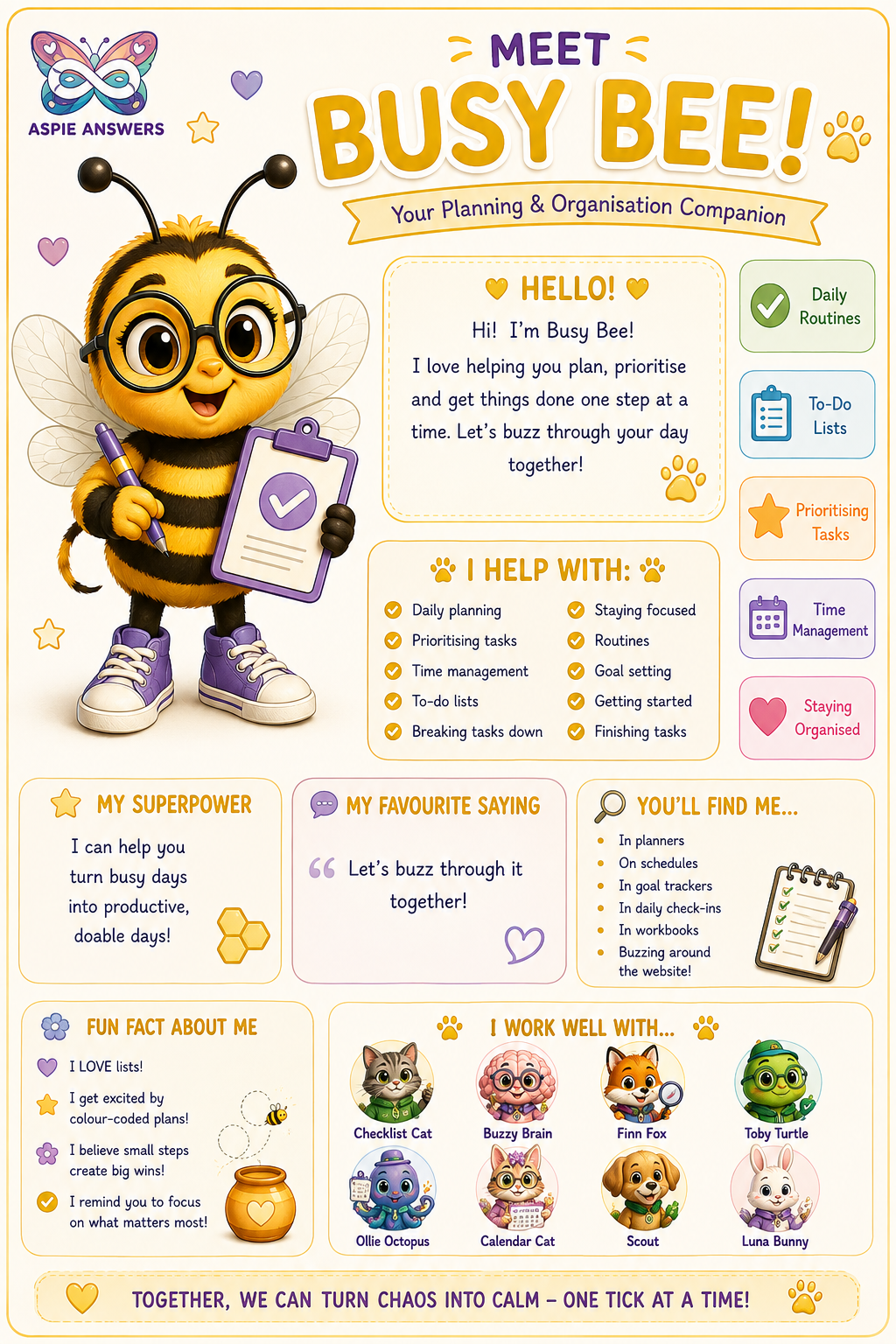
Busy Bee
Busy Bee helps turn a broad goal into visible, manageable next steps, reminders and practical plans.

Finn Fox
Finn helps when a plan changes, a barrier appears or another route may fit better. A changed plan is not a failed plan.
“I cannot get started.”
Make the first step smaller, use body doubling, set a five-minute starting point or ask someone to help you begin.
“The plan uses too much energy.”
Reduce the pace, schedule recovery time, remove optional steps or look for a more accessible alternative.
“I feel anxious or uncertain.”
Gather one piece of information, rehearse the next step, use a written script or involve a trusted support person.
“My circumstances changed.”
Pause and review. A goal can be adapted, postponed, replaced or released without judgement.
Make Progress Visible
Tick steps, move cards, use a tracker or keep a “done” list.
Add Connection
Use a check-in person, mentor, coach, friend or body-doubling session.
Add Meaning
Reconnect the task to the life, independence or opportunity it supports.


A review is a chance to learn, not a pass-or-fail test. Ask:
- What moved forward, even slightly?
- What helped me take action?
- What made the goal harder than expected?
- What support, accommodation or information is missing?
- Should I continue, adjust, pause or choose a different goal?
Goal-setting tools can live in the central Work & Employment resource system rather than being duplicated on individual pages.
What if I do not know what career I want?
Your goal can be exploration rather than a final decision. Try researching a few roles, speaking with people, volunteering, completing a strengths activity or arranging work experience.
How many goals should I work on at once?
There is no perfect number. One main goal and one small supporting goal may be easier to manage than a long list. Choose what fits your capacity.
Does missing a deadline mean I failed?
No. A deadline is information, not a verdict. Review what happened, change the time frame, reduce the goal or add support.
Can someone help me set my goals?
Yes. A careers adviser, support person, employment service, teacher, mentor, whānau member or trusted friend can help you explore options and turn ideas into steps while keeping the goal centred on your preferences.
