
Page display options
Supporting Neurodivergent Children & Young People
A practical, neurodiversity-affirming guide for understanding and supporting neurodivergent children and young people across home, education, friendships, emotional wellbeing, growing independence and major life transitions.
For the adults around a neurodivergent child or young person
This page is for parents, carers, whānau, educators, support workers and professionals who want to understand a child or young person more clearly and support them without treating difference as failure.
Parents, carers & whānau
For everyday support, communication, routines, emotional safety, school advocacy, independence and changing family needs.
Educators & school staff
For inclusive learning, sensory-aware environments, communication support and participation without unnecessary pressure.
Support workers & professionals
For working collaboratively with the young person and the people who know them best.
Start with understanding, not correction
Neurodivergence can affect attention, communication, learning, sensory processing, emotional regulation, movement, memory, planning, social interaction and many other parts of daily life. The pattern is different for every person.
Look beneath the behaviour
Ask what the child may be communicating through avoidance, distress, shutdown, restlessness, repeated questions or difficulty starting.
Notice the environment
Noise, lighting, uncertainty, social demand, transitions, hunger, fatigue and information overload can all affect capacity.
Expect uneven skills
A young person can be highly capable in one area and need substantial support in another.
Separate ability from performance
Being unable to demonstrate a skill in a stressful setting does not necessarily mean the skill or understanding is absent.
Help the young person know that difference does not make them less
Support works best when it recognises strengths alongside needs. Interests, creativity, humour, fairness, persistence, pattern recognition, deep knowledge, honesty, imagination, empathy, movement, problem-solving and many other strengths can be important parts of identity.
- Talk about neurodivergence in age-appropriate, respectful language.
- Make room for interests without treating them as something that must always be redirected.
- Notice effort and growth without making praise conditional on masking.
- Use strengths to support areas that are harder.
- Let the young person see neurodivergent adults, creators and communities represented positively.
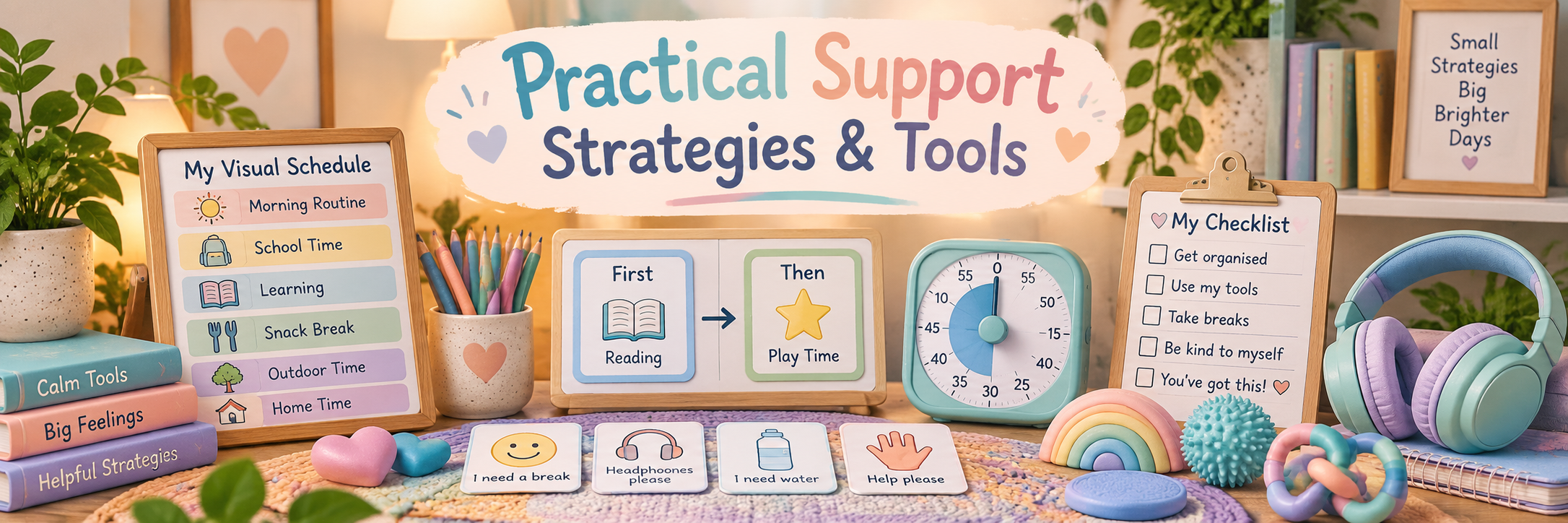
Reduce the amount a child has to hold in their head
Many useful supports work by making information visible, reducing uncertainty, simplifying tasks or giving the young person a clearer way to communicate what they need.
Visual supports
Schedules, Now/Next or First/Then boards, visual timers, checklists and task sequences can reduce working-memory load.
Preparation
Explain what will happen, who will be there, what may change and what the young person can do if they need a break.
Task chunking
Break large jobs into smaller steps and show a clear endpoint.
Choice
Offer meaningful choices without presenting so many options that decision-making becomes harder.
Low-demand recovery
After school, appointments or social situations, allow time to decompress before adding more demands.
Predictable support
Consistency in how adults respond can make difficult moments safer and easier to recover from.
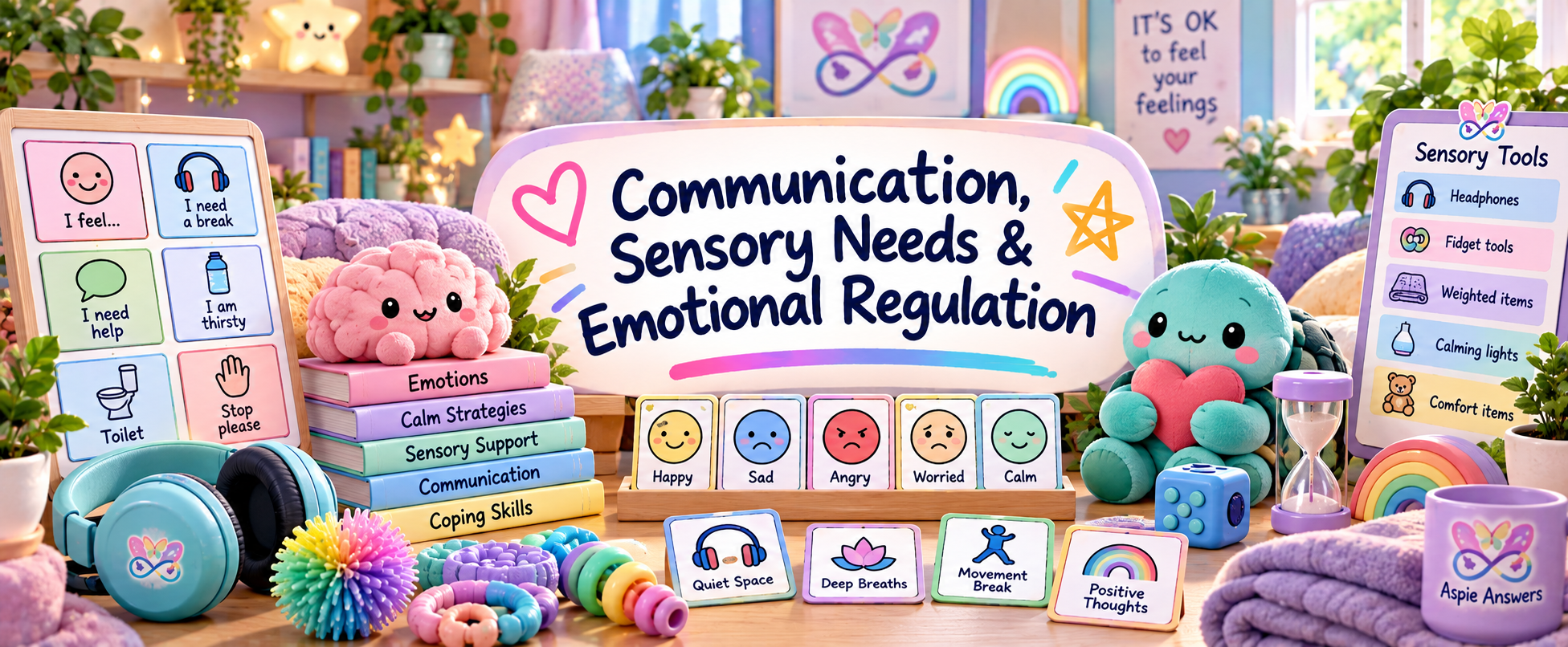
Support communication before expecting explanation
A child may understand more than they can express in the moment. Stress, sensory overload, language processing, anxiety and fatigue can all reduce access to speech or make complex questions much harder to answer.
Communication options
Speech, text, typing, drawing, pointing, visual cards, AAC, gestures and yes/no options can all be valid communication.
Sensory support
Headphones, movement, quiet space, softer lighting, comfortable clothing and familiar sensory tools may increase capacity.
Co-regulation
A calm adult presence can help a young person settle before reflection or problem-solving is expected.
Emotional language
Use simple feeling and body-signal tools without demanding that the child identify an exact emotion while distressed.
Participation can look different from compliance
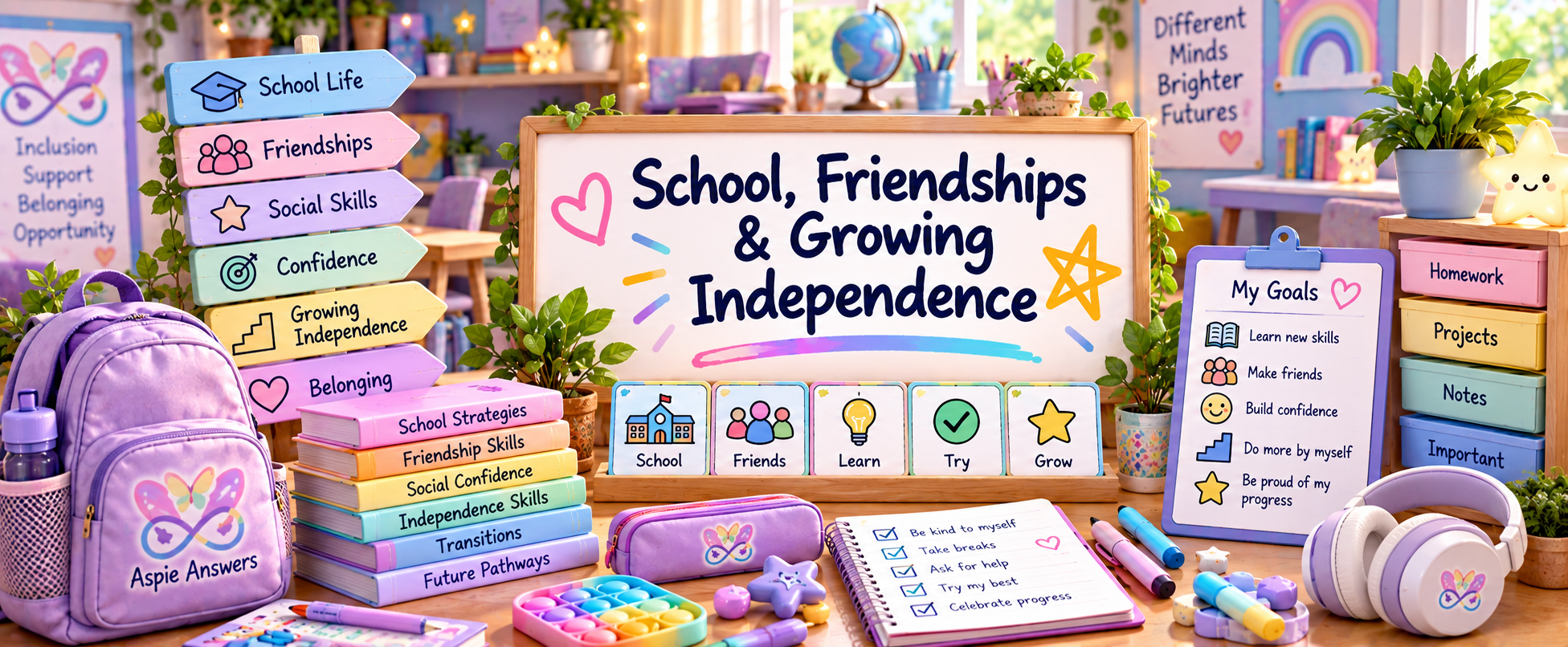
Young people may need different ways to access learning, friendships, activities and increasing independence. Support should help them participate without requiring them to hide their needs.
Learning support
Clear instructions, visual examples, reduced copying, movement breaks, alternative ways to show knowledge and extra processing time can help.
Friendships
Support shared interests, boundaries, consent, communication and recovery from social overload rather than teaching scripts alone.
Confidence
Give real responsibilities at an achievable level and allow mistakes without turning every error into a lesson.
Daily living skills
Teach cooking, hygiene, travel, organisation, money, appointments and household skills in small, practical steps.
Support the young person to recognise and communicate their own needs
Self-advocacy develops when children and young people are allowed to practise saying what helps, what does not help, when they need more information and when something feels uncomfortable.
- Offer genuine choices where a choice is possible.
- Respect “no”, “stop”, “not now” and requests for space wherever safety allows.
- Teach ways to ask for clarification, breaks, sensory support and extra time.
- Include the young person in meetings and decisions at a level that works for them.
- Do not interpret quietness, compliance or lack of eye contact as agreement.
Build future skills without rushing the future
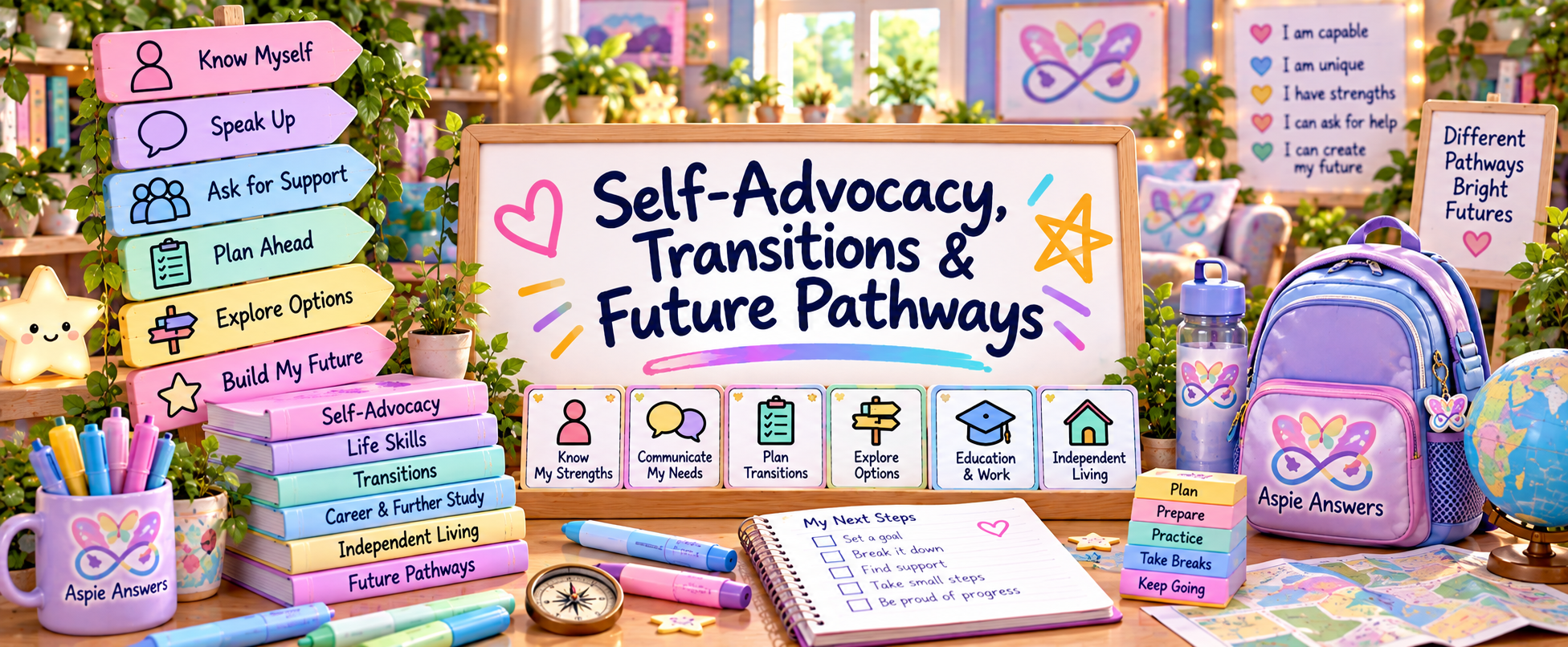
Growing independence is not a race. Some young people will need more time, more practice, different pathways or ongoing support. Independence can also mean knowing how to use supports effectively.
Moving between stages
Prepare early for school changes, adolescence, further study, work, services and changes in routines or expectations.
Life skills
Teach practical skills in real settings, with repetition, visuals and scaffolding where needed.
Education & work pathways
Explore strengths, interests, access needs and different routes rather than assuming one standard pathway.
Supported independence
Using reminders, transport support, coaching, technology or another person’s help can still be part of an independent adult life.
Bring together what each person knows
Parents and whānau may know what the young person is like across days and settings. Educators may see learning patterns. Clinicians and allied-health professionals may bring specialist knowledge. The young person brings their own lived experience. Good support makes room for all of these perspectives.
Share what already works
Tell new professionals about communication preferences, triggers, strengths, successful routines and useful accommodations.
Ask for clear plans
Clarify who is doing what, what the goal is, how progress will be reviewed and how the young person will be included.
Question harmful goals
Ask whether a goal increases access, safety or autonomy—or mainly makes the young person look more typical.
Review support as needs change
What worked at age seven may not fit at fourteen or eighteen. Supports should grow with the person.
Support changes as children grow
Early childhood
Prioritise safety, communication, sensory support, play, predictable care and understanding the child’s signals.
School-age children
Build self-understanding, learning accommodations, friendships, everyday skills and ways to ask for help.
Teenagers & young adults
Increase participation in decisions, privacy, identity, self-advocacy, life skills, relationships, study, work and future planning.
Choose the pathway that best matches the young person’s current needs
Parents, Family & Whānau
Return to the main family doorway for broader parenting, family-life and support pathways.
Family Life
For whole-household routines, communication, siblings, sensory-friendly home life, outings and family wellbeing.
Visual Supports Library
For schedules, communication cards, emotion supports, task sequences and visual tools.
Learning Differences & Learning Disabilities
For broader learning-difference information, education and support pathways.
Health & Allied Health Support
For professional and allied-health support routes when specialist input may help.
Parents & Carers Mental Health
For caregiver wellbeing, emotional load and mental-health support.