
Page display options
Routines & Visual Supports at Home
A neuroaffirming guide to creating calmer, more predictable home routines using visual schedules, checklists, timers, choice boards and other supports — with flexibility for different ages, needs, energy levels and family circumstances.
Families looking for clearer, gentler daily structure
This page is for parents, carers, whānau, guardians and other trusted adults supporting neurodivergent children and young people at home. It may be especially useful where autism, ADHD, AuDHD, learning differences, sensory needs, executive-function differences, anxiety, overwhelm or changing capacity affect everyday routines.
For busy mornings
When getting dressed, eating, brushing teeth, packing bags and leaving home feels rushed or confusing.
For after-school recovery
When the young person needs predictable decompression, food, quiet, movement or reduced demands after a long day.
For transitions
When stopping one activity and starting another is difficult, especially if the change feels sudden or unexpected.
For growing independence
When external supports can help a young person remember steps, make choices and manage more of a routine themselves.
Make the day easier to understand
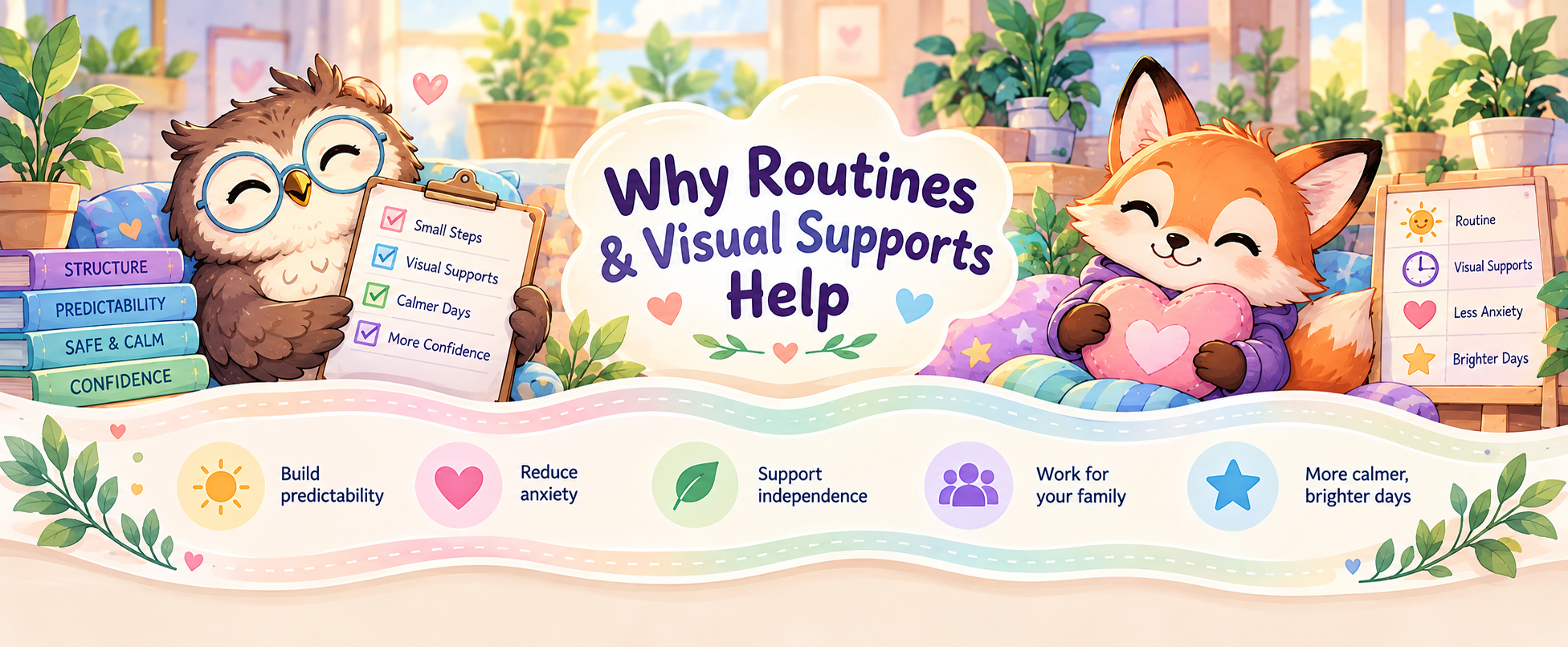
Predictability can reduce uncertainty, anxiety, sensory overload and emotional overwhelm. Visual supports can make expectations and transitions easier to understand while reducing how much information has to be remembered or processed verbally.
Show what is happening now and next
A visible plan can make the day feel less uncertain and reduce repeated questions about what is coming.
Reduce verbal load
Pictures, written steps and checklists can stay visible after spoken instructions have disappeared.
Externalise memory and planning
Visual tools can hold the steps, sequence, reminders and time cues so the young person does not have to keep everything in working memory.
Support participation without constant prompting
A routine can become a shared reference point rather than relying on repeated adult instructions.
Useful supports can make everyday tasks feel more manageable
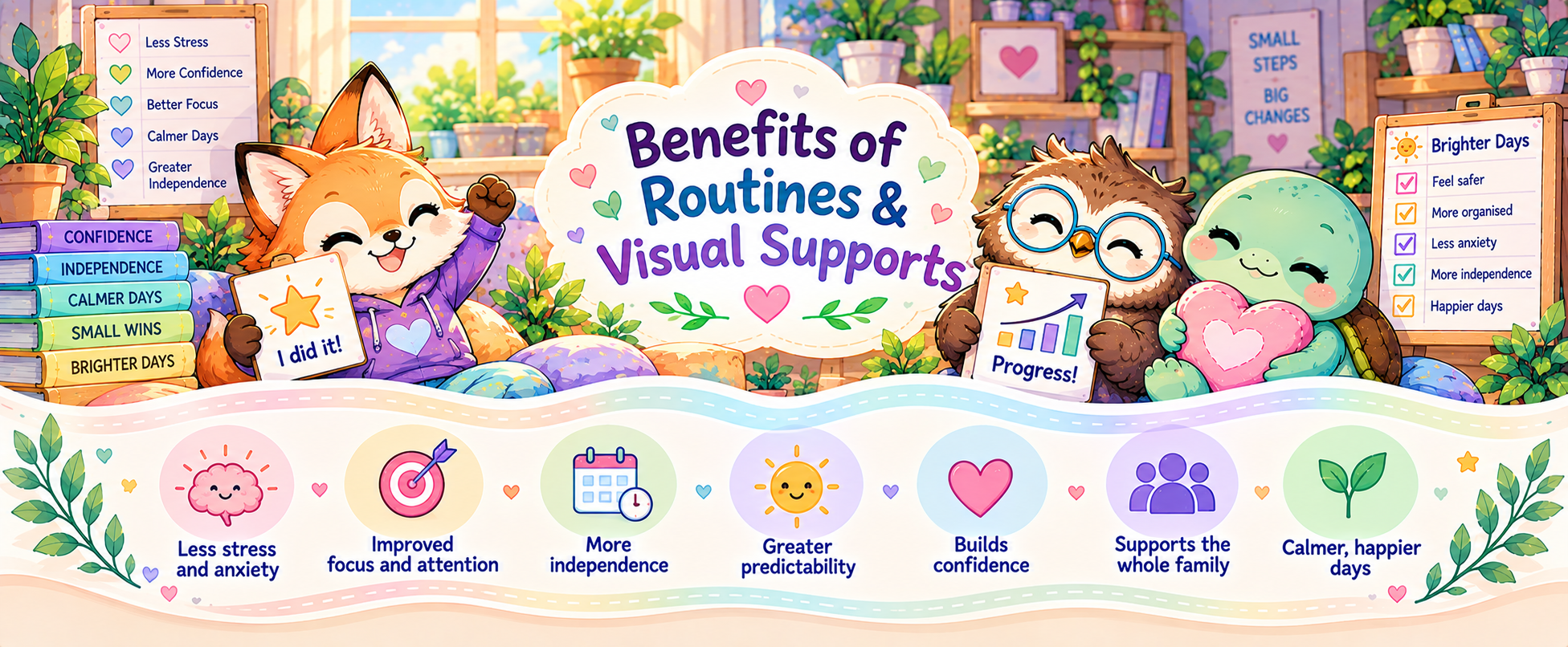
- More clarity and predictability around daily tasks and transitions.
- Reduced pressure from too many verbal instructions or reminders.
- Support for working memory, planning, sequencing and task completion.
- More opportunities for choice, autonomy and growing independence.
- Less conflict when everyone can refer to the same visible plan.
- More confidence when the young person can see progress and know what comes next.
- A calmer home environment when expectations are clearer and more flexible.
Choose the format that matches the person and the task
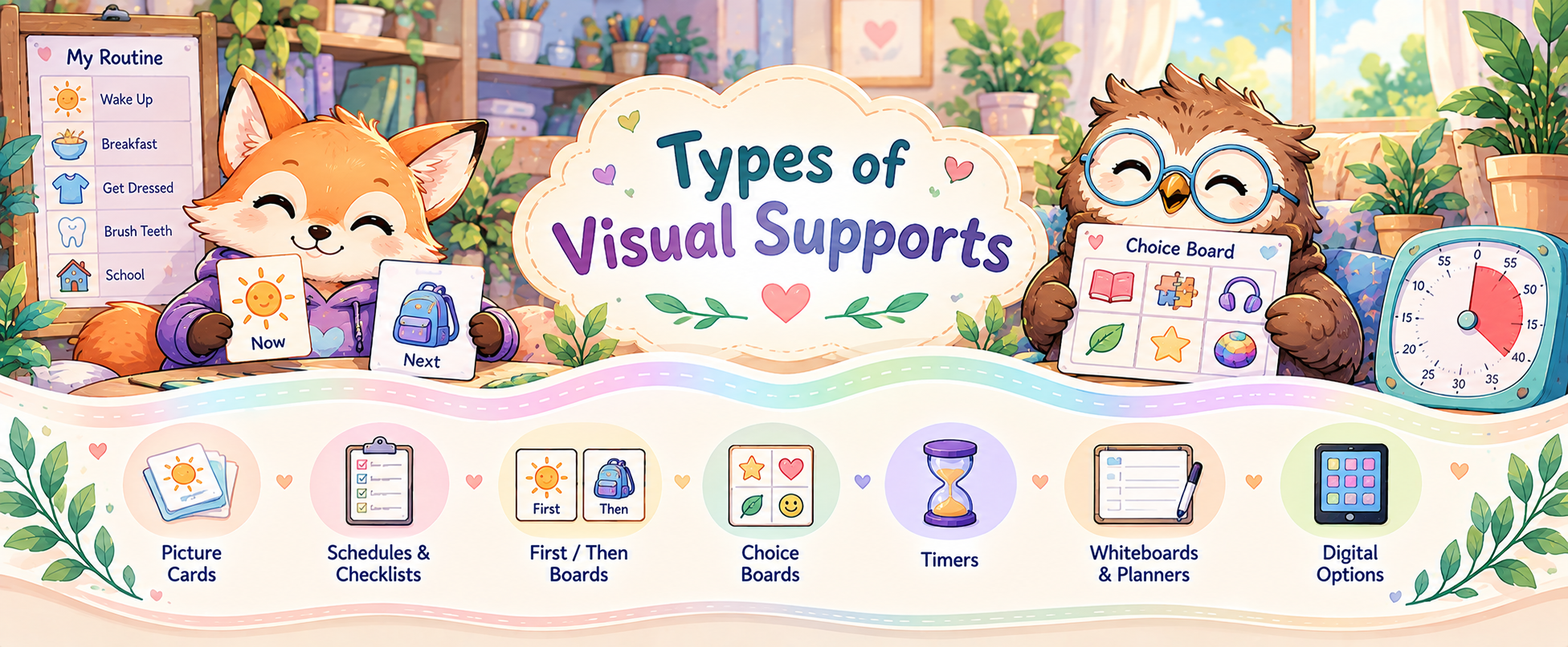
Picture cards
Useful where images are easier or quicker to process than written instructions.
Written schedules & checklists
Good for people who prefer words, clear steps and a visible way to track progress.
First / Then boards
Show one immediate step followed by what happens next without displaying a whole long routine.
Choice boards
Offer visible options for activities, food, breaks, regulation tools or the order of manageable tasks.
Timers & visual timers
Make passing time and transition warnings more concrete, especially when time is otherwise hard to sense.
Whiteboards & planners
Helpful for changing routines because the plan can be edited without starting again.
Objects or physical cues
Some people understand a real object, basket or prepared item more easily than a picture.
Phone or tablet reminders
Digital calendars, alarms, widgets and checklists may fit older children and teenagers well.
Hybrid supports
Combine visuals, words, timers and adult support where one tool alone is not enough.
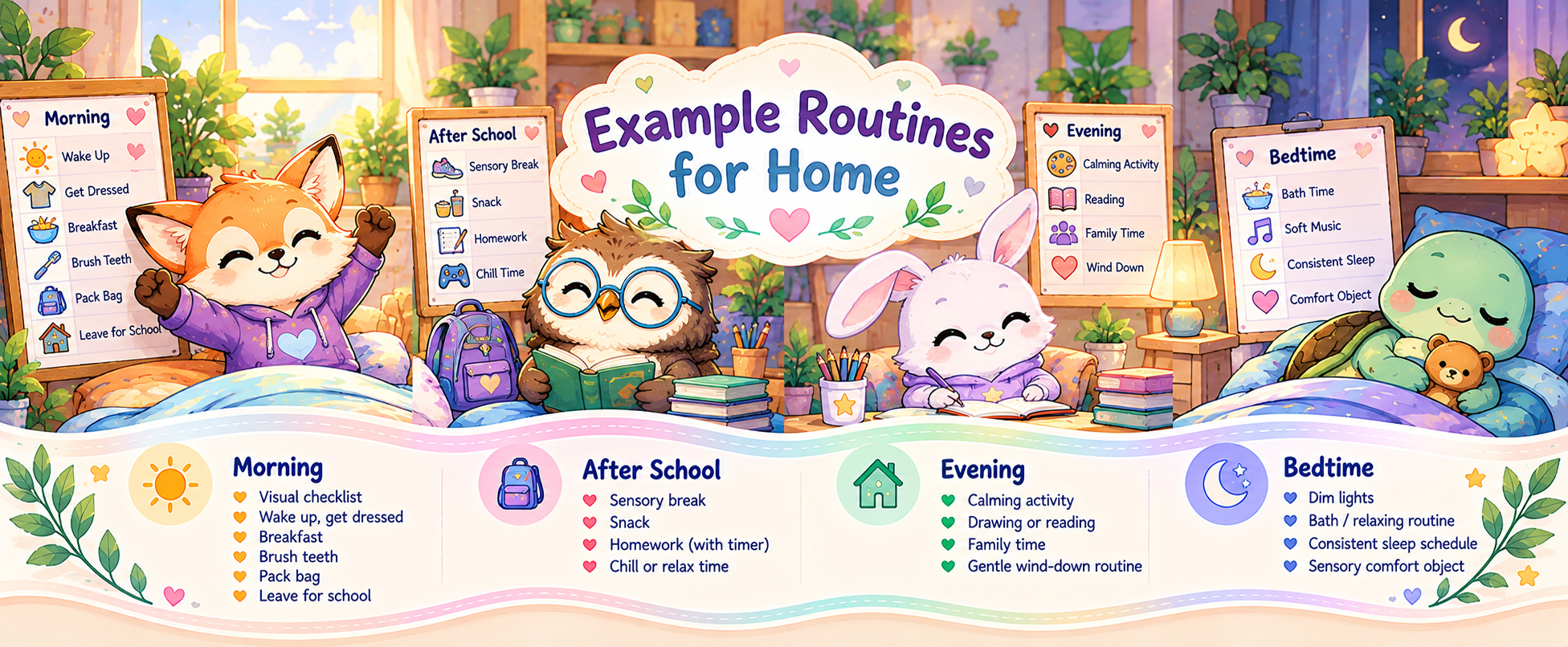
Use examples as starting points, not rules
Morning
- Wake up
- Get dressed
- Breakfast
- Brush teeth
- Pack bag
- Leave home
After school
- Arrive home
- Snack or drink
- Sensory or quiet break
- Movement if helpful
- Homework or activity only when capacity allows
- Relax or play
Evening
- Dinner or preferred meal routine
- Calming activity
- Drawing, reading, interests or family time
- Prepare what is needed for tomorrow
- Reduce demands as the day winds down
Bedtime
- Dim lights where possible
- Bath, shower or alternative hygiene routine
- Pyjamas / comfortable clothing
- Quiet activity or music
- Sensory comfort items if helpful
- Sleep routine at a workable time
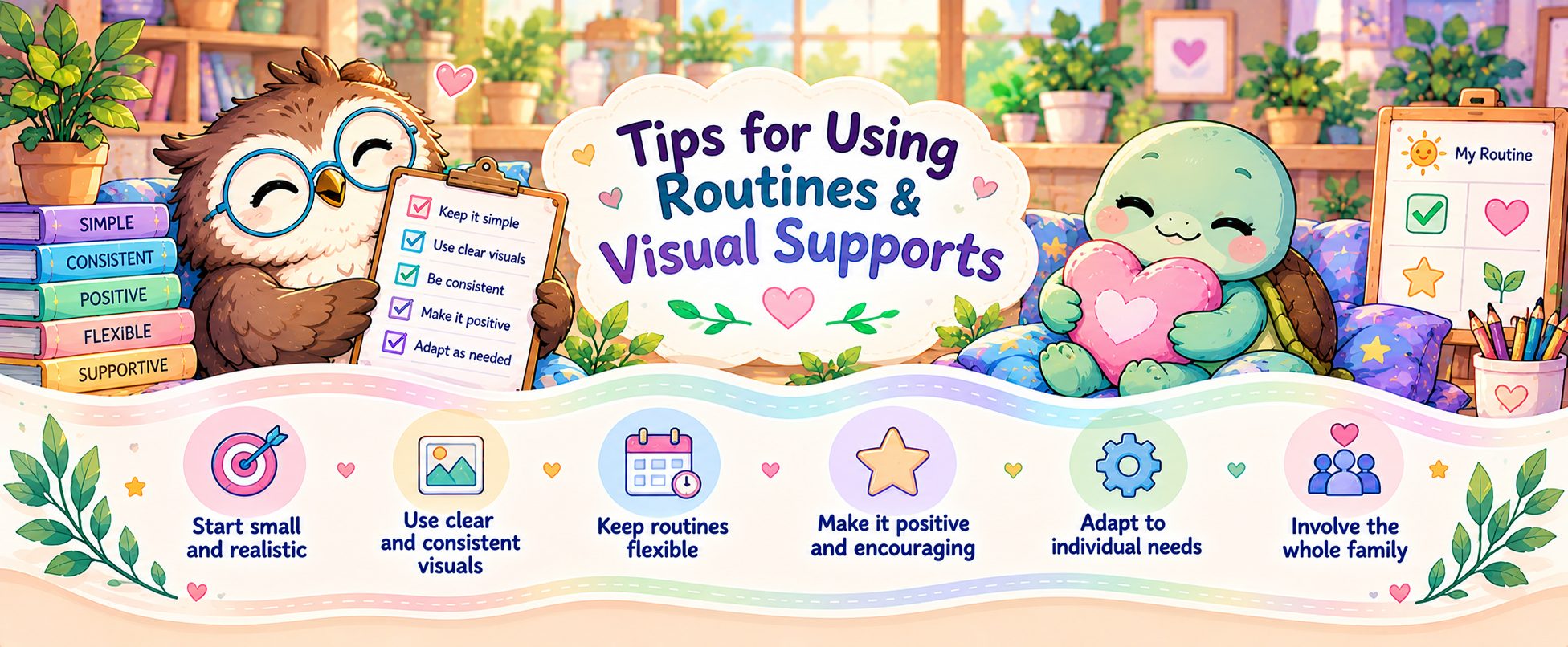
Build it with the young person, not around them
- Start small. Choose one part of the day that regularly causes confusion, stress or repeated prompting.
- Identify the real steps. Break the routine into only the steps that are actually useful.
- Choose the visual format. Pictures, words, icons, objects, a whiteboard, phone reminders or a combination can all work.
- Make the support easy to see. Put it where the routine happens rather than somewhere it will be forgotten.
- Add transition cues. Timers, countdowns, “five minutes then…” and showing the next step can reduce surprises.
- Build in choice. Let the young person choose the order of compatible tasks, the visual style, break options or preferred rewards where appropriate.
- Practise when things are calm. A brand-new system is harder to learn during overload or conflict.
- Review and adjust. If the routine creates more stress than it removes, change it.
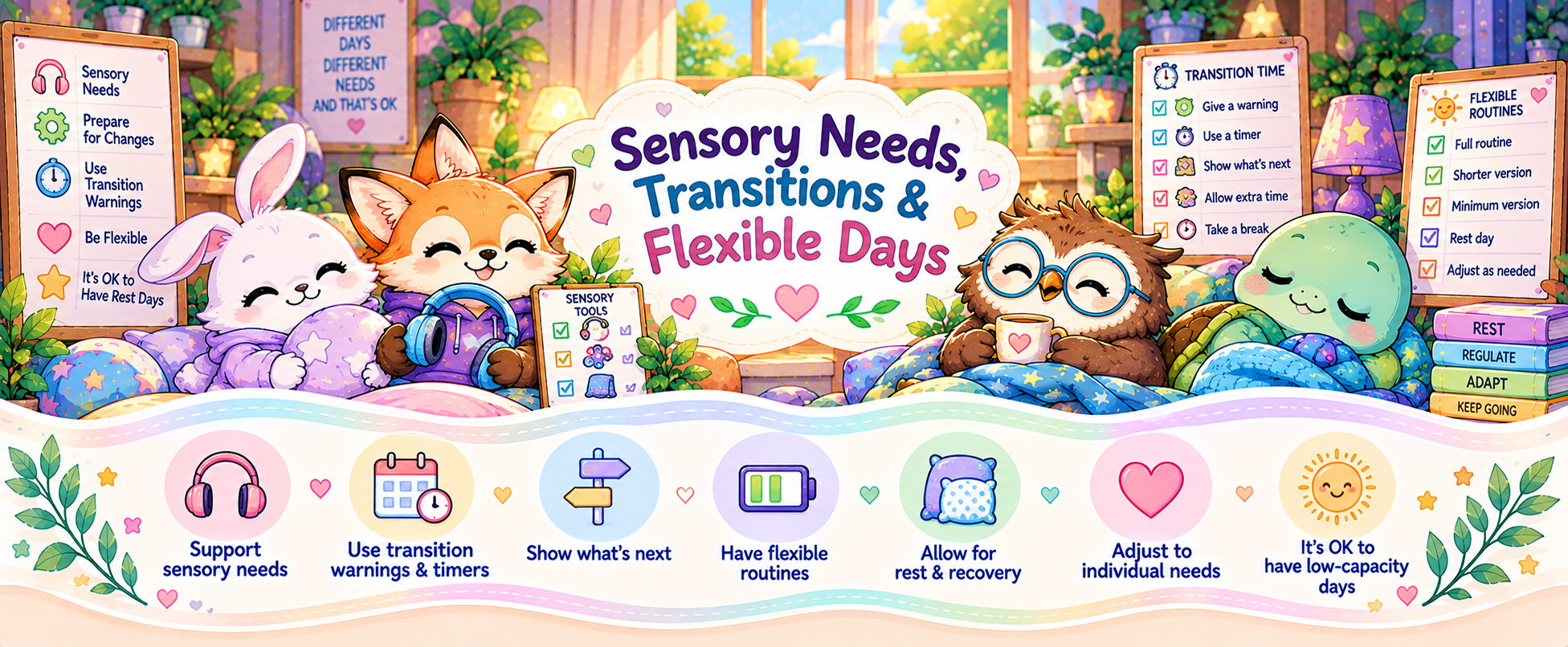
Sometimes the routine is not the real problem
A task can be difficult because of sensory discomfort, fatigue, executive-function demands, uncertainty, hunger, pain, social exhaustion, masking, anxiety or a previous difficult experience. Changing the environment may help more than adding another reminder.
Sensory considerations
Think about lighting, noise, clothing, water temperature, food textures, smells, crowded spaces and how much talking is happening.
Transition warnings
Use countdowns, visual timers, a “next” card or a clear signal before stopping a preferred activity.
Decompression
Some young people need quiet, movement, food, solitude, sensory tools or time with a special interest before another demand.
Unexpected changes
Where possible, show the change visually and explain what is staying the same as well as what is different.
Have a full routine, a shorter routine and a minimum routine
Capacity changes. A routine that works on a well-rested day may be unrealistic during illness, burnout, sensory overload, hormonal changes, poor sleep, school stress or a difficult week.
| Routine level | What it might look like | Purpose |
|---|---|---|
| Full routine | All usual steps when capacity is good. | Normal structure and independence practice. |
| Shorter routine | Keep the most important steps and remove optional extras. | Reduce effort while keeping some predictability. |
| Minimum routine | Only essential wellbeing and safety tasks. | Protect energy and reduce overload on very hard days. |
| Rest / recovery day | Pause ordinary expectations where possible. | Support recovery rather than pushing through depleted capacity. |
Notice what is helping the household, not just whether the checklist was completed
What worked?
Which visual or routine reduced reminders, anxiety, waiting, conflict or confusion?
What felt hard?
Was the routine too long, too verbal, too rigid, badly timed or asking for more capacity than was available?
What can be simplified?
Look for steps that can be prepared earlier, combined, removed, automated or shared.
What do you need?
Parents and carers also need rest, practical help, realistic expectations and support. A sustainable routine should not depend on one exhausted adult doing everything.
Reassess before adding more pressure
- Check whether the person understands the visual format being used.
- Reduce the number of steps if the routine has become too demanding.
- Check sensory barriers, fatigue, hunger, pain, sleep and emotional load.
- Ask whether the timing needs to change.
- Offer more choice over order, breaks or how a task is completed.
- Update the routine when age, school, medication, family circumstances or support needs change.
- Use qualified health, education or support professionals when difficulties are persistent or complex.
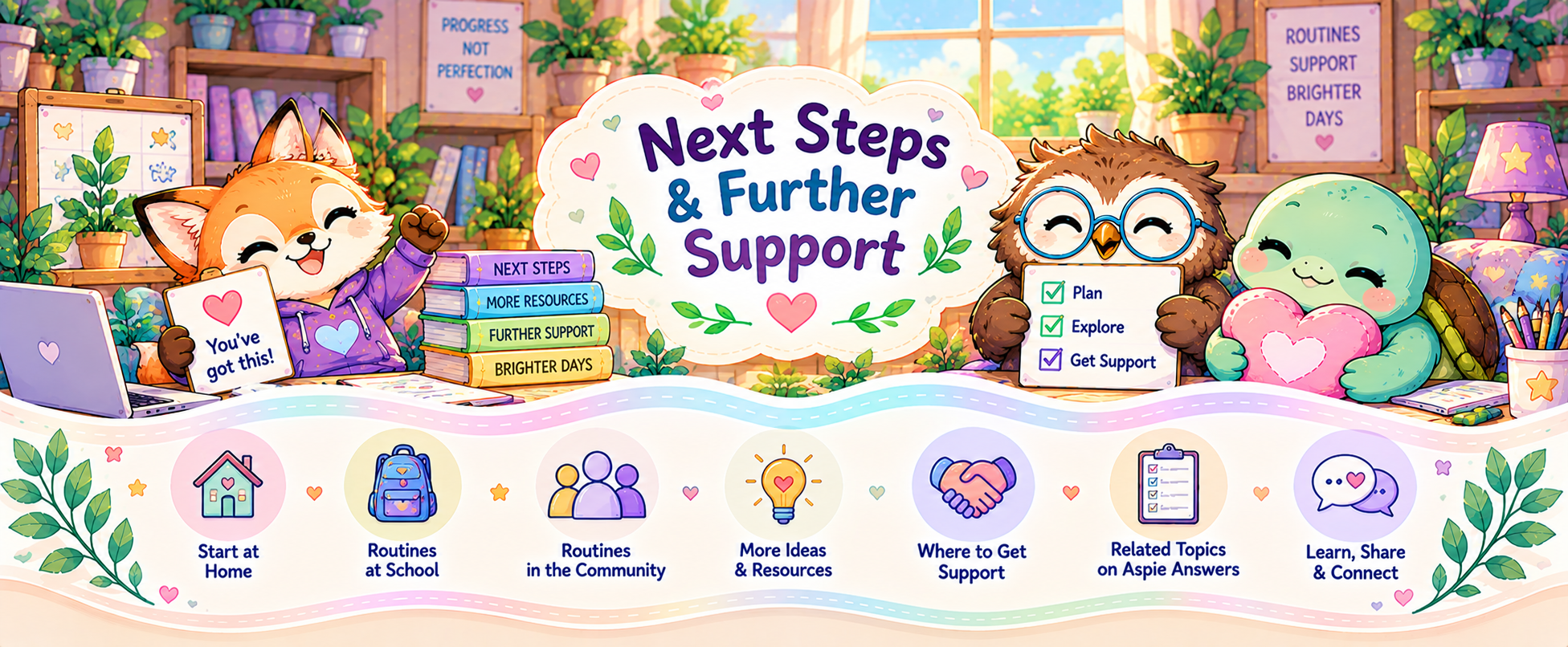
Choose the next route that matches what your family needs
Parents, Family & Whānau
For broader family support, relationships, household life and growing independence.
Everyday Help
For practical planning, routines, organisation, reminders and daily-living support.
Parents & Carers Mental Health
For emotional wellbeing, mental-health concerns, regulation, safety, advocacy and carer wellbeing.
Resources & Downloads
For printable tools, worksheets, planners, guides and practical resources.
Support & Directories
For professional, community and practical services when information alone is not enough.
Learning Differences & Learning Disabilities
For broader understanding and support around learning differences and disabilities.