
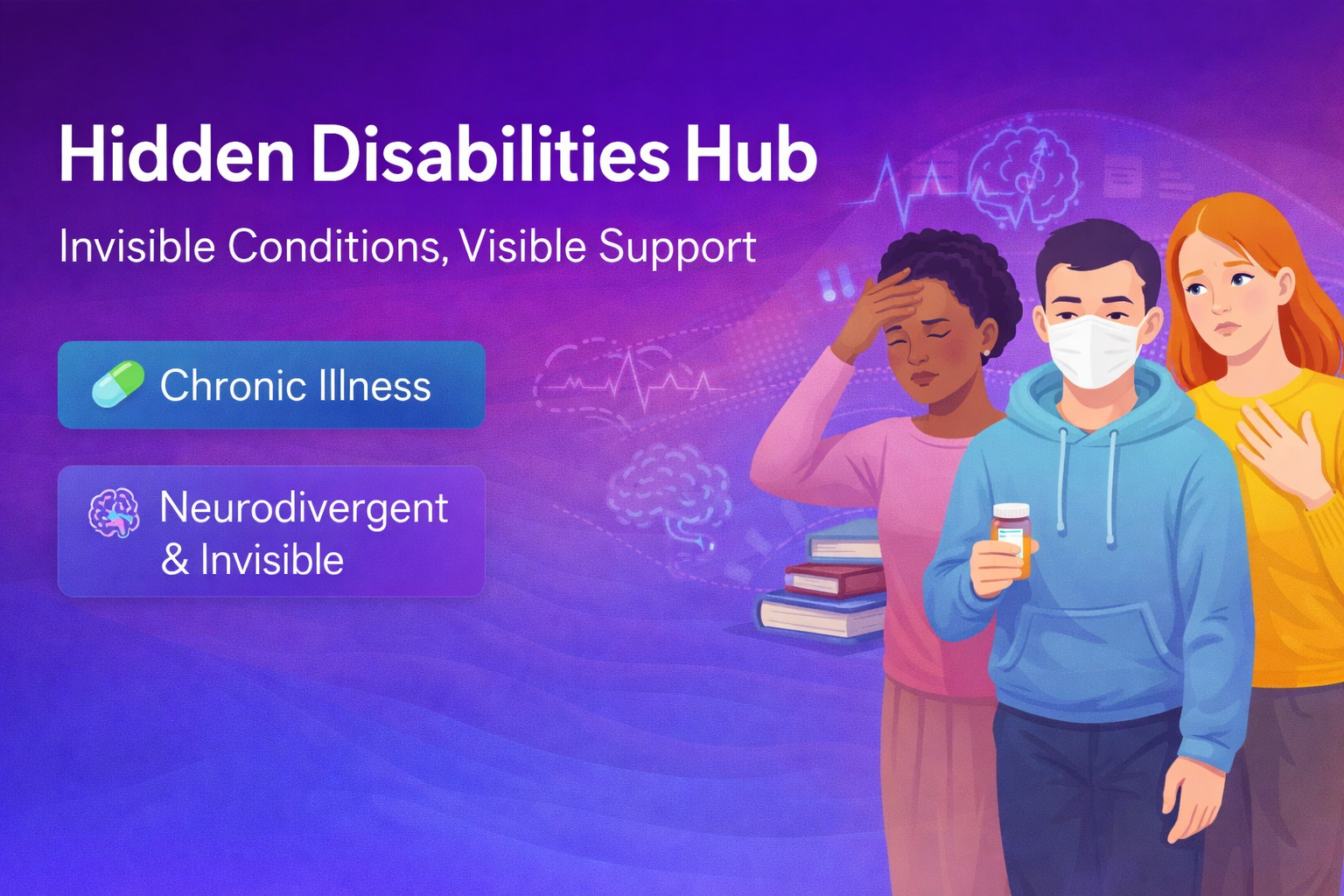
Aspie Answers • Hidden Disabilities Hub
Hidden Disabilities Hub — Main
Welcome to the Hidden Disabilities Hub — a calm, practical space for understanding invisible conditions, everyday support needs, and what helps at home, school, and work. Hidden disabilities can be unseen but very real — and you deserve clarity, compassion, and support.
Start Here
Hidden disabilities are conditions that may not be obvious to others, even though they can significantly affect daily life. This hub is built to support understanding, reduce stigma, and offer practical next steps.
What “hidden disability” can mean
Support needs that aren’t visible — such as fatigue, sensory overload, pain, executive functioning difficulties, anxiety, or cognitive load.
- People may look “fine” while struggling.
- Needs can change day-to-day.
- Access needs are still valid without “proof”.
How to use this hub
Browse by topic, jump to supports, or go straight to practical tools. You can also build this out slowly over time.
- Use the “Tools & downloads” section as your printable library anchor.
- Add school/work pages underneath as you create them.
- Link your directories later (Version 2).
Common Hidden Disabilities
These are the core topic “cards” for your hub. Link each one to an existing page if you have it, or leave as “Coming soon” for now.
Neurodivergence
Autism, ADHD, learning differences, sensory needs, masking, burnout.
Mental Health (invisible impact)
Anxiety, depression, trauma responses, panic, OCD traits, overwhelm.
Chronic Illness & Pain
Fatigue, flare-ups, mobility changes, brain fog, pacing and recovery.
Invisible Disabilities at School
Classroom needs, learning load, sensory supports, understanding behaviour.
Invisible Disabilities at Work
Disclosure, accommodations, burnout prevention, communication supports.
Access Needs & Support Tools
Sunflower lanyard, communication cards, support plans, “I need…” scripts.
Support & Accommodations
A simple, supportive structure you can expand later. This section is designed to stay stable while you add pages beneath it.
At home
- Energy pacing, routine supports, and reducing sensory load.
- Clear communication: “what helps / what doesn’t”.
- Recovery time after social or busy days.
At school / study
- Extra time, breaks, quiet spaces, alternative formats.
- Visual instructions, chunking tasks, check-ins.
- Support plans and “teacher quick tips” sheets.
At work
- Flexible scheduling, reduced sensory stress, written instructions.
- Clear role expectations and realistic deadlines.
- Disclosure scripts + accommodation request templates.
Language matters
Hidden disability support works best when we avoid assumptions. “You don’t look disabled” can be harmful. Aim for: curiosity, consent, and respect.
Tools & Downloads
This is your “library anchor” area. Link these to your future libraries (worksheets, flashcards, visual supports) as you build them.
Printable templates
Support plan template, accommodation request, daily pacing tracker.
Worksheets & tools
Grounding tools, emotion regulation sheets, sensory checklists.
Help & Crisis Support
This is a safe “Version 1” block. You can expand this later into your full NZ + global directory hub.
If you need urgent help
- NZ: If you’re in immediate danger, call 111.
- Add your preferred NZ crisis links here (phone/text/chat).
- If outside NZ: add your local emergency number and crisis service link.
Directory links (add later)
- Support & Directories Hub (NZ + global)
- Hidden Disabilities “Find support near me” list
- Workplace and school support providers
FAQ
Do I need a diagnosis to need support?
No. Support needs are valid even if you’re still exploring what’s going on or are on a long waitlist. Start with what helps you function and feel safe.
How do I explain a hidden disability to others?
Keep it simple: what it affects + what helps. Example: “I get overwhelmed by noise and need short breaks to reset.” You don’t owe anyone your full story.
Can schools and workplaces make adjustments?
Often, yes. Adjustments can include flexible deadlines, quiet spaces, written instructions, breaks, assistive tech, and supportive communication.