
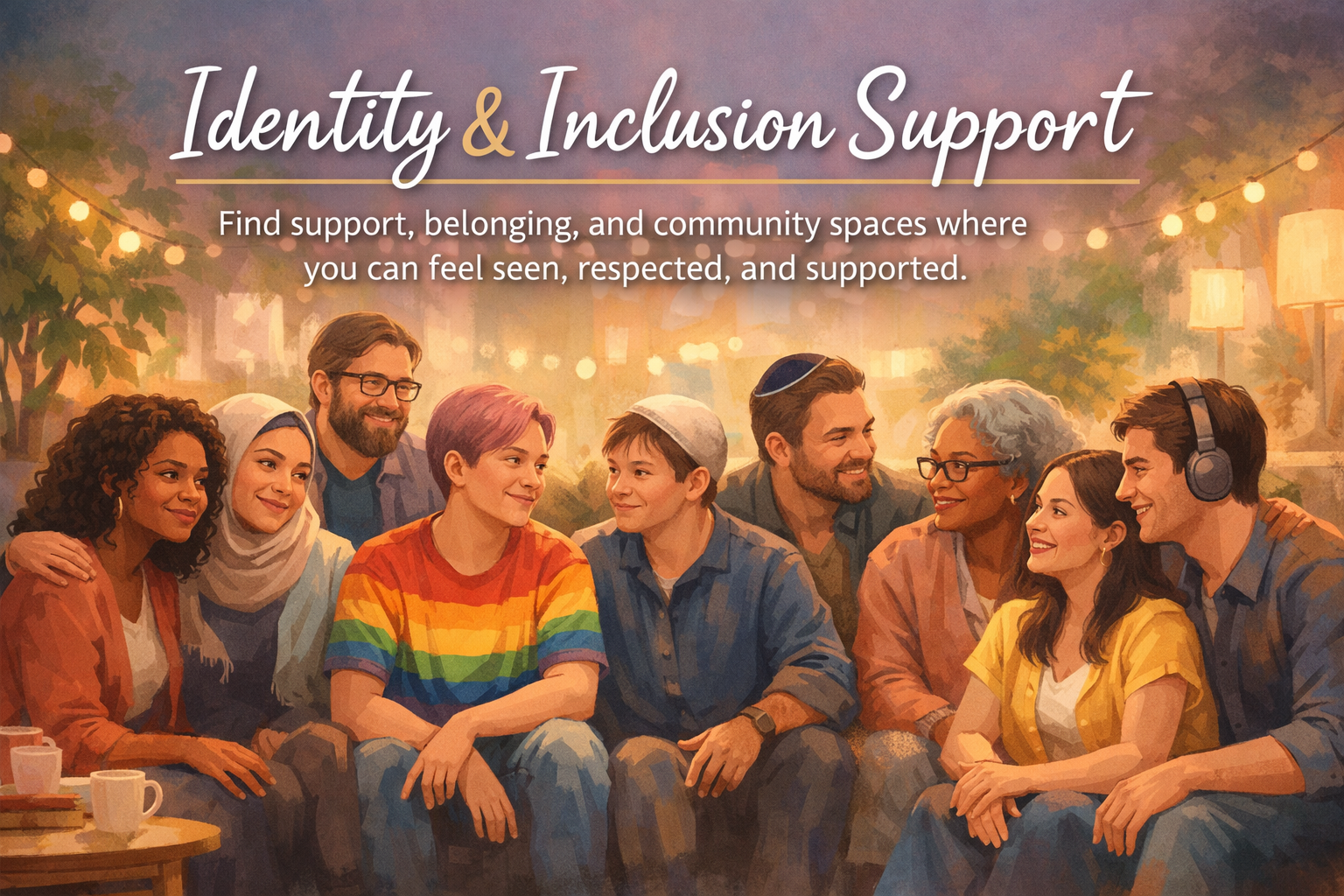
Identity & Inclusion Support
For many people, support is not only about information or practical help. It is also about feeling seen, respected, included, and able to show up without hiding important parts of who you are. This page is here to help people explore identity-based and inclusion-focused support pathways more easily.
Start Here
Support feels different when you feel safe to be yourself.
Belonging Matters
Support can feel more meaningful when you do not have to hide, shrink, or explain away who you are. Feeling respected, included, and safe to show up as yourself can make a real difference to whether support feels supportive at all.
Different Types of Identity & Inclusion Support
Start with the kind of support space that feels most affirming and relevant to you.
Identity-Based Support Spaces
Support spaces where shared identity can reduce the pressure of needing to explain or defend who you are.
Explore SupportInclusion-Focused Communities
Communities that value respect, belonging, dignity, and making space for people to feel safe and included.
Explore SupportCultural & Community Connection
Support spaces that centre cultural identity, heritage, community belonging, and connection through shared background.
Explore SupportLGBTQIA+ Affirming Spaces
Support spaces where people can explore community, belonging, and affirmation without needing to hide who they are.
Explore SupportNeurodivergent Identity Support
Support pathways that make room for identity, acceptance, lived experience, and community around neurodivergence.
Explore SupportFaith, Culture & Belonging Spaces
Connection-focused spaces where faith, values, culture, and identity can be part of feeling supported rather than left out.
Explore SupportWhy Inclusion Matters
Feeling included is not an extra. It can shape whether support feels safe, accessible, and real.
Feeling Respected
Support becomes more meaningful when people feel treated with dignity and respect.
Feeling Safe
Safety can make it easier to open up, connect, and reach for support without fear of judgment.
Feeling Seen
Being able to show up more fully can reduce the pressure of masking, explaining, or hiding parts of yourself.
Feeling Understood
Inclusion can create more genuine connection, belonging, and trust in support spaces.
Helpful Starting Points
If you feel unsure, begin with the option that feels safest or closest to what you need.
I Want to Feel Seen and Understood
Start here if feeling recognised, respected, and not needing to hide matters most right now.
Start HereI Want Belonging and Community
Use this pathway if what you need most is connection, inclusion, and a stronger sense of belonging.
Start HereI Want Affirming Support Spaces
Start here if support only feels useful when it also feels safe, respectful, and affirming of who you are.
Start HereI Need Urgent Support Now
If things feel immediate, unsafe, or overwhelming right now, move to urgent support instead.
Get HelpInclusion by Style
Not every inclusive support space looks the same. Start with a style that feels more manageable for you.
Online Inclusive Spaces
Helpful for flexibility, privacy, accessibility, and easing into affirming support more gradually.
In-Person Community Spaces
Useful for face-to-face belonging, local connection, and feeling held in real-world community.
Structured Inclusion-Focused Groups
Good if you prefer more clarity, facilitation, and an intentionally supportive environment.
Gentle Belonging Spaces
Lower-pressure spaces that feel softer, calmer, and easier to step into without needing to share too much too soon.
Reassurance
It is okay if you are still figuring out where you fit, what feels safe, or which spaces feel right for you.
You Do Not Need to Prove You Belong
Support spaces should not make you work to be accepted. You deserve spaces where respect, dignity, and inclusion are already part of the foundation.
You Can Start Gently
If affirming spaces still feel new or nerve-wracking, it is okay to begin slowly. Reading, observing, or choosing a gentler space first still counts as a real step.
Need urgent help instead?
If you are in immediate danger, feel unsafe, or need urgent emotional support, please use local emergency or crisis services in your area as soon as possible.
Frequently Asked Questions
Quick answers to make this page easier to use.
What if I want support that feels more affirming of who I am?
That is exactly what identity-based and inclusion-focused support spaces can offer. Feeling respected and safe can make support feel far more real and useful.
What if I am still figuring out my identity or where I fit?
That is okay. You do not need to have everything figured out to look for supportive, respectful spaces.
Do I have to share personal things right away?
No. Many people begin by reading, observing, or getting a feel for a space before sharing more.
Can inclusive community support still help if I already have other support?
Yes. Inclusion-focused support can sit alongside other kinds of support and offer belonging, safety, and affirmation in ways that other help may not.
What if online feels easier than in-person?
That is completely okay. Online spaces can be a very valid starting point and may feel safer or more accessible for many people.
What if support feels urgent?
If things feel immediate or unsafe, move to crisis and emergency help first rather than general support pages.
Belonging Can Be Part of Support
Start with one kind of affirming space that feels safest or most manageable for you right now.