

Work · Employment · Access · Inclusion · Support
Hidden Disabilities at Work
Hidden disabilities can affect work in ways other people may not see — including fluctuating energy, pain, sensory load, concentration, memory, communication and recovery after high-demand periods. This page explores common workplace experiences and practical supports that can reduce barriers.
Gentle Note
This page mentions disability, chronic illness, pain, fatigue, sensory overload, workplace stress, masking, disclosure and burnout. Use the sections that are helpful and take breaks whenever you need them.
Workplace processes vary
This page offers general education and practical ideas. Rights, documentation requirements, workplace policies and formal adjustment processes vary by country, organisation and employment setting.
Who This Page Is For
For workers, supporters and workplaces
People managing less-visible needs at work
Explore workplace barriers, communication approaches, practical supports, pacing and tools.
People creating accessible workplaces
Use the page to understand fluctuating needs, reduce unnecessary barriers and make support conversations clearer.
People helping someone navigate work
Find practical language and examples that may help with planning, advocacy and workplace conversations.
What You Will Find Here
A practical guide to hidden disability in the workplace
Understanding
What hidden disability can mean at work and why fluctuating capacity is not the same as lack of effort.
Common challenges
Energy, brain fog, sensory load, meetings, communication, unpredictability and changing demands.
Supports & accommodations
Environmental, task, time and management approaches that may reduce workplace barriers.
Communication & disclosure
Ways to talk about impact and support needs without sharing more personal information than feels appropriate.
Tools & strategies
Planning, sensory, pacing and energy-management ideas drawn from the original page.
Resources & next steps
Routes into wider Hidden Disabilities information, support services, glossary definitions and practical resources.
Understanding Hidden Disabilities at Work
Workplace impact can be significant even when disability is not obvious
A hidden or non-apparent disability may affect energy, pain levels, sensory processing, memory, mood, communication or daily functioning. At work, the original page framed this as fluctuating capacity — not lack of effort.
Chronic illness, pain & migraine
Symptoms may affect stamina, concentration, attendance, mobility or the ability to sustain a full day.
Mental health
Anxiety, depression, PTSD and other mental health experiences may create less-visible barriers at work.
Neurodivergence
Autism, ADHD, learning differences and related processing or sensory needs may affect how work environments and demands are experienced.
Neurological conditions & brain injury
Memory, processing, fatigue, pain, communication or sensory needs may not be immediately apparent to colleagues.
Masking & pushing through
A person may appear to cope while using substantial effort, then experience exhaustion or reduced capacity afterwards.
Good days & harder days
Being able to do something on one day does not necessarily mean the same level of capacity will be available every day.
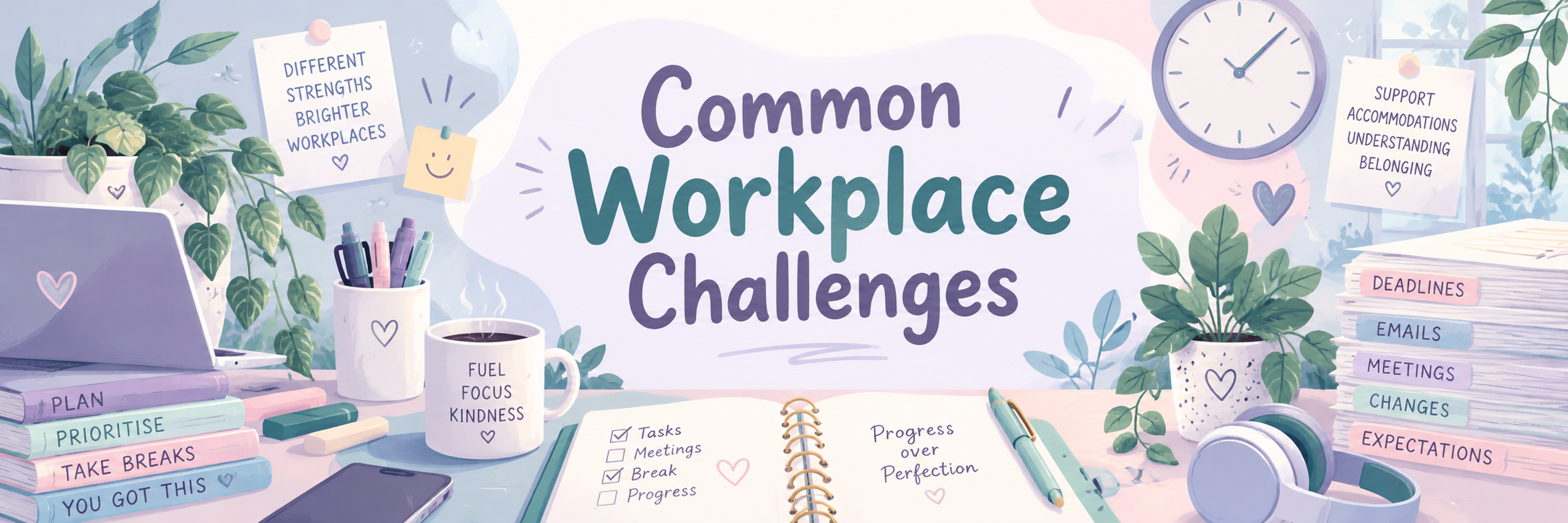
Common Workplace Challenges
Some barriers are easy to miss from the outside
Energy & pacing
Fatigue, pain, flare-ups or “crashing” after busy or high-demand periods.
Focus & brain fog
Slower processing, forgetfulness, difficulty switching tasks or attention dips.
Sensory load
Noise, lighting, crowds, strong smells, shared spaces or constant interruptions.
Meetings & communication
Fast discussion, unclear expectations, speaking on the spot or having to process multiple people at once.
Unpredictability
Last-minute changes, shifting priorities or inconsistent routines may increase stress and errors.
Recovery after work
The visible workday may not show the amount of recovery required afterwards, especially after sensory, cognitive or physical strain.

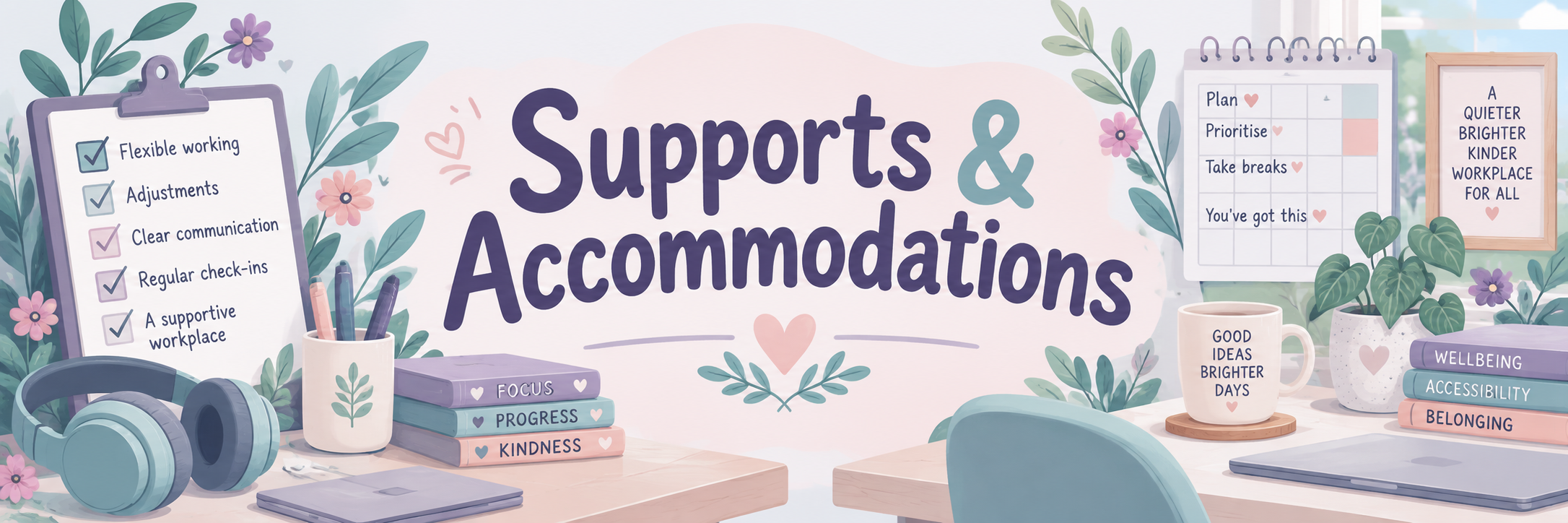
Supports & Accommodations
Reduce barriers rather than expecting people to push through them
Environment supports
- Quieter work areas or thoughtful desk placement
- Noise reduction and sensory-friendly options
- Lighting adjustments where practical
- Remote or hybrid options where the role and workplace allow
Task & information supports
- Written instructions and clearly ranked priorities
- Large tasks broken into smaller steps
- Clear follow-up after meetings
- Reduced ambiguity about deadlines and expectations
Time & pacing supports
- Flexible start times where possible
- Planned breaks and buffer time
- Extra time for complex or admin-heavy tasks where appropriate
- Reprioritising during flare-ups or lower-capacity periods
Supportive management
Consent-based check-ins such as “What would help?”, predictable expectations and calm problem-solving can reduce the pressure around asking for access support.
Normalise access tools
The original page emphasised that accommodations work best when they are treated as practical access tools rather than favours.
Individual fit matters
Not every support will suit every person or every role. Start with the actual barrier, then identify what change may reduce it.
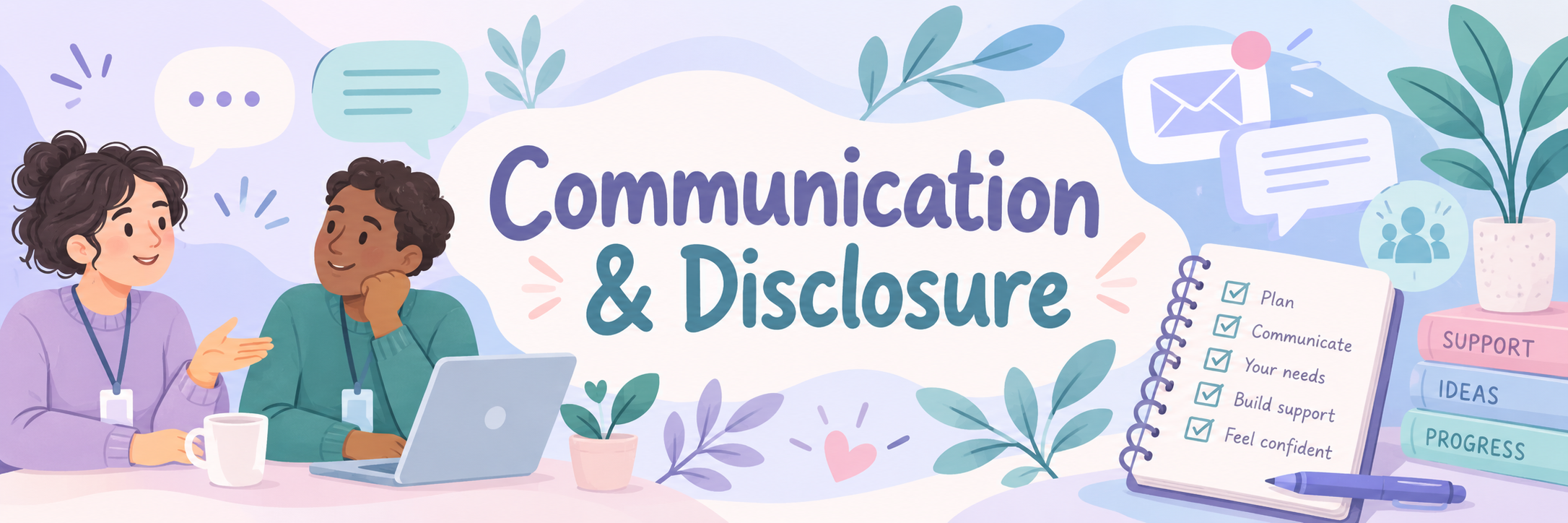
Communication & Disclosure
People can choose how much personal information they want to share
The original page recognised several approaches: some people disclose a diagnosis, some explain only the impact and support need, and some prefer to keep health information private. Workplace procedures and legal requirements vary, so a person may need to check the process that applies in their setting.
A simple impact + support structure
“I’m managing a health or disability-related need that affects energy and focus. I work best with clear priorities, written instructions and short breaks.”
Keep the request practical and identify one or two changes that would make the work more accessible.
When you do not want to name a diagnosis
“I’m managing a condition that fluctuates.”
“I need a lower-distraction space for focus work.”
“Written follow-ups help me avoid errors.”

Tools & Strategies
Small practical supports can add up
Planning tools
- Task lists with one to three daily priorities
- Calendar blocks and buffer time between meetings
- Timers or gentle time cues
- A “done list” to track completed work and progress
Sensory & regulation tools
- Headphones or earplugs where safe and appropriate
- Screen or lighting adjustments
- Fidget or tactile tools if useful
- Short movement, quiet or breathing breaks
Energy budgeting
Treat available energy as limited and variable: match demanding work to stronger periods where possible, plan recovery after high-output tasks and build rest points into the week.
Prioritising
When capacity drops, identify what is essential, what can wait and what can be simplified rather than trying to maintain the same output at all costs.
Meeting support
Agendas in advance, clear action points and written summaries can reduce memory and processing load.
Recovery planning
Notice which parts of the workday use the most energy and build recovery around those pressure points where possible.
Resources & Next Steps
Continue with the pathway that best matches the current need
Frequently Asked Questions
Hidden disabilities at work
Do I always have to disclose a diagnosis to ask for workplace support?
The original page said that people may be able to request support based on impact and what helps, but workplace processes vary. Some settings may ask for documentation for formal adjustments, so check the process that applies where you work.
What if my capacity changes from week to week?
The original page recognised fluctuating conditions. Useful approaches may include flexible scheduling, reprioritising tasks, planned breaks and clear expectations about what can pause during a flare or lower-capacity period.
How can a manager support someone well?
Reduce ambiguity, ask consent-based questions such as “What would help?”, make expectations predictable and treat accommodations as access tools rather than special treatment.
Can support be useful even if someone looks fine?
Yes. The central message of this page is that appearance does not reliably show pain, fatigue, sensory load, cognitive effort or other access needs.
Information & Rights Boundary
Aspie Answers provides general education and support information. This page is not employment, legal, medical or occupational-health advice. Employment rights, reasonable accommodation or adjustment duties, privacy rules and documentation requirements differ between countries and workplaces. For a formal workplace issue, use an appropriate employment, disability, legal or advocacy service in your location.
Good support starts with the actual barrier
A hidden disability does not need to be visible to affect someone’s workday. Clear communication, thoughtful adjustments and flexible problem-solving can help create a more accessible workplace.