
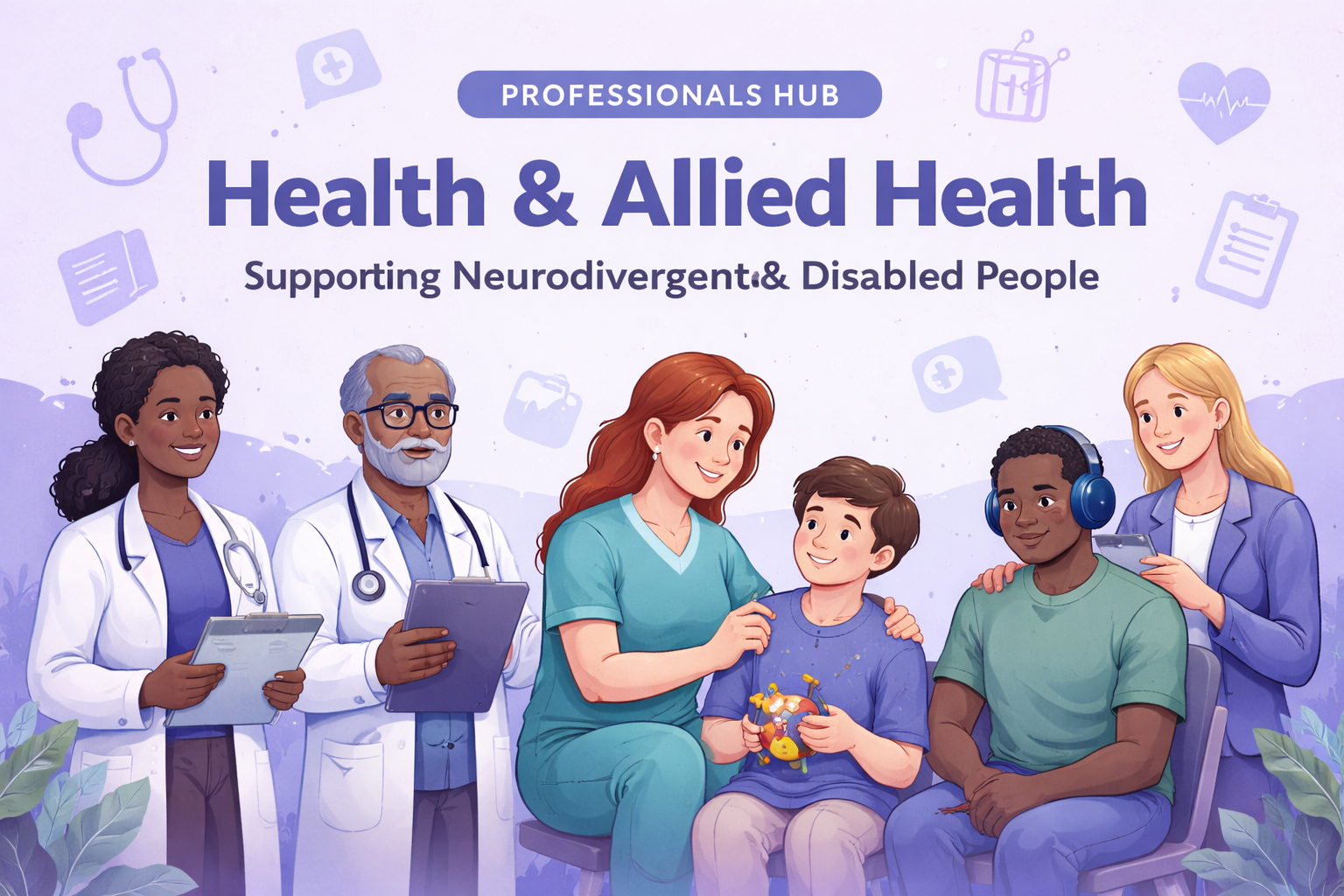
Aspie Answers • Professionals Hub
Health & Allied Health
Practical, neurodivergent-friendly guidance for clinicians and allied health professionals supporting people whose needs may be invisible, fluctuating, or misunderstood.
Overview
Neurodivergent and hidden disability experiences can show up in healthcare through sensory sensitivity, communication differences, masking, fluctuating symptoms, pain and fatigue, executive functioning challenges, and medical trauma or burnout. Small changes in how we communicate, structure appointments, and design environments can reduce barriers and improve outcomes.
What people may need (and why it’s missed)
- Extra processing time (information overload or brain fog)
- Clear, concrete language (reduces misunderstandings)
- Predictable steps (reduces anxiety and shutdown)
- Sensory adjustments (lights, noise, smells, touch)
- Support person / advocate (memory, confidence, communication)
Goals for neurodivergent-friendly care
- Increase clarity and trust
- Reduce sensory and social strain
- Improve informed consent and follow-through
- Support autonomy and dignity
- Prevent “looks fine” misinterpretations
Communication that supports understanding
The fastest wins usually come from communication structure: clear questions, one step at a time, and confirming understanding without shame.
Helpful clinician scripts
- “Would you like me to explain it in a few short steps?”
- “Do you prefer written instructions, dot points, or visuals?”
- “We can pause. Would a break help right now?”
- “Can you tell me what you understood, so I know I explained it clearly?”
Questions that reduce overwhelm
- Ask one question at a time
- Offer options (A/B/C) rather than open-ended where possible
- Use scales with examples (“0–10: 0 = none, 10 = worst you’ve had”)
- Summarise and confirm at the end
Sensory-friendly care
Sensory barriers can prevent people from attending appointments, staying regulated, or returning for follow-up. Sensory-friendly options don’t have to be perfect — just predictable and flexible.
Environment tweaks
- Offer quieter waiting options where possible
- Reduce bright/fluorescent lighting (or offer sunglasses/low light room)
- Minimise strong fragrances
- Allow noise-cancelling headphones
- Explain touch before touch; ask consent every step
Appointment structure
- Offer first/last appointment times when possible
- Provide what-to-expect info before arrival
- Allow breaks or “pause words”
- Shorter appointments + more frequent check-ins if needed
- Offer telehealth when suitable
Reasonable adjustments & accommodations
Adjustments can support fairness and access — not “special treatment”. The best approach is collaborative: ask what helps, document it, and keep it consistent.
Examples (quick list)
- Written summaries after appointments
- Text/email reminders with clear steps
- Support person allowed in the room
- Extra processing time for decisions
- Alternative communication (AAC, notes, typed responses)
Documentation tips
- Record preferences in the file (“prefers dot points, minimal touch, quiet room”)
- Use strengths-based language
- Avoid judgement labels (“non-compliant” → “barriers to follow-through”)
- Confirm consent and choices clearly
Tools & templates (clinic-friendly)
These are simple, reusable tools you can adapt for your service. (We can build downloadable versions later for your mini library.)
1) “What Helps Me” intake prompts
Short checklist: sensory needs, communication preferences, supports, triggers, and what to avoid.
2) Appointment plan (First / Then)
Visual steps: arrival → waiting → appointment → next steps → follow-up.
3) After-visit summary template
Dot points: what we discussed, decisions made, medications/tests, next actions, dates.
FAQ
Quick answers — we can expand into dedicated pages later.
What if a patient looks “fine” but reports severe impact?
Many people mask symptoms in healthcare settings. Prioritise functional impact, consistency over time, and patient-reported experience. Offer follow-up options and written supports.
How do I support someone with sensory distress during an appointment?
Pause. Reduce stimulation if possible (lights/noise). Offer grounding choices (water, breathing space, step-by-step explanation). Ask what helps and document it for next time.
How can I improve informed consent for neurodivergent patients?
Use clear language, break information into small parts, confirm understanding without shame, and provide written summaries. Allow processing time and encourage questions.