
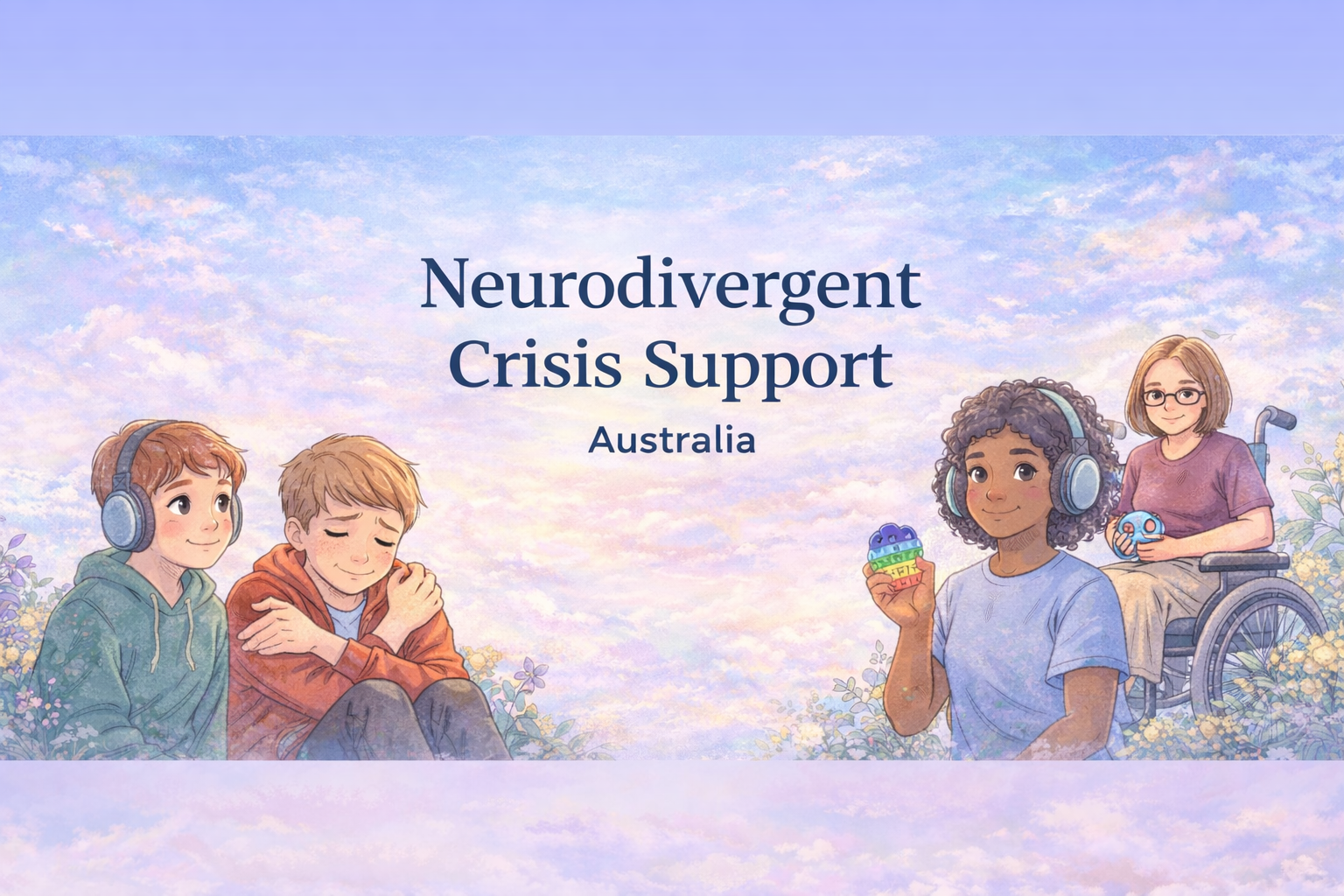
Neurodivergent Crisis Support (Australia)

Neurodivergent Crisis Support Australia banner

Australia Crisis Support Directory

Neurodivergent Crisis Support (Australia)

A calm, clear support page for neurodivergent people (autistic, ADHD, learning differences, sensory processing differences) and anyone who needs low-pressure crisis options — phone, text/chat, and state/territory urgent mental health support.

🧠 Neurodivergent-friendly 🧘 Low sensory / low pressure 💬 Text + chat options 📍 State & territory help
Content notice: This page discusses mental health crisis support and may feel heavy.
Immediate danger: Call 000 now.
Medical emergency: If you can, go to your nearest Emergency Department or call emergency services.
This directory is educational and not a substitute for professional medical advice, diagnosis, or treatment.

Start here (right now)

If your brain feels foggy or overwhelmed, choose one small step. You do not need to explain everything. You can ask for slower pacing, fewer questions, or text-based options.

Crisis support (Australia-wide)

🚨 Emergency

If you are in immediate danger, call now.

📞 Lifeline (24/7)

Talk to someone now (crisis support and suicide prevention).

13 11 14

💬 Kids Helpline (young people)

Support for children and young people. If talking is hard, check their online options too.

1800 55 1800

🌿 Beyond Blue

Support for anxiety, depression, and distress — plus chat options.

1300 22 4636

☎ Suicide Call Back Service

Phone and online counselling for people thinking about suicide, carers, and those bereaved by suicide.

1300 659 467

🧡 13YARN (First Nations)

Culturally safe crisis support for Aboriginal and Torres Strait Islander peoples.

13 92 76

🧑‍🤝‍🧑 Carer Gateway

If you’re supporting someone else, you deserve support too.

1800 422 737

Neurodivergent-friendly crisis support tips

What you can say (simple scripts)

Use any line below — short is okay:

  • “I’m neurodivergent. Please speak slowly and ask one question at a time.”
  • “I’m overwhelmed. Can we do yes/no questions?”
  • “I struggle to talk. Do you have chat/text options?”
  • “Bright noise/sensory stuff is hard. I need a quiet, low-stimulation approach.”
  • “Please summarise the plan in 2–3 steps.”
Reminder: You don’t need to “prove” distress to deserve help. If you are struggling, that is enough.

Find support in my area (Australia)

State & territory urgent mental health support

If you need urgent local mental health support, use your state/territory triage line where available. If your area uses regional numbers, the “Find services” link will take you to official info/directories.

Tip: If the service asks lots of questions, you can say: “I need this slower — one question at a time. Please summarise the plan at the end.”

If you’re supporting someone neurodivergent

Do / Don’t (quick guide)

✅ Do

• Offer 2 choices (call/text; inside/outside)
• Reduce sensory input (quiet, dim, less talking)
• Validate: “This is real. I’m here.”
• Break it into 1–2 steps

🚫 Don’t

• Demand eye contact or “calm down”
• Ask lots of questions fast
• Threaten or shame
• Force big decisions in one moment

Related crisis pages

If you build more Australia-specific pages (Youth/Teens, LGBTQIA+, Parents/Carers), add them here as internal links.

↑ Back to top