Discord communities can feel more live, interactive, and fast-moving than some other online spaces. They can be a great fit for ongoing peer support, shared interests, real-time discussion, and community connection, but it is still important to choose servers carefully and notice what feels safe and manageable for you.
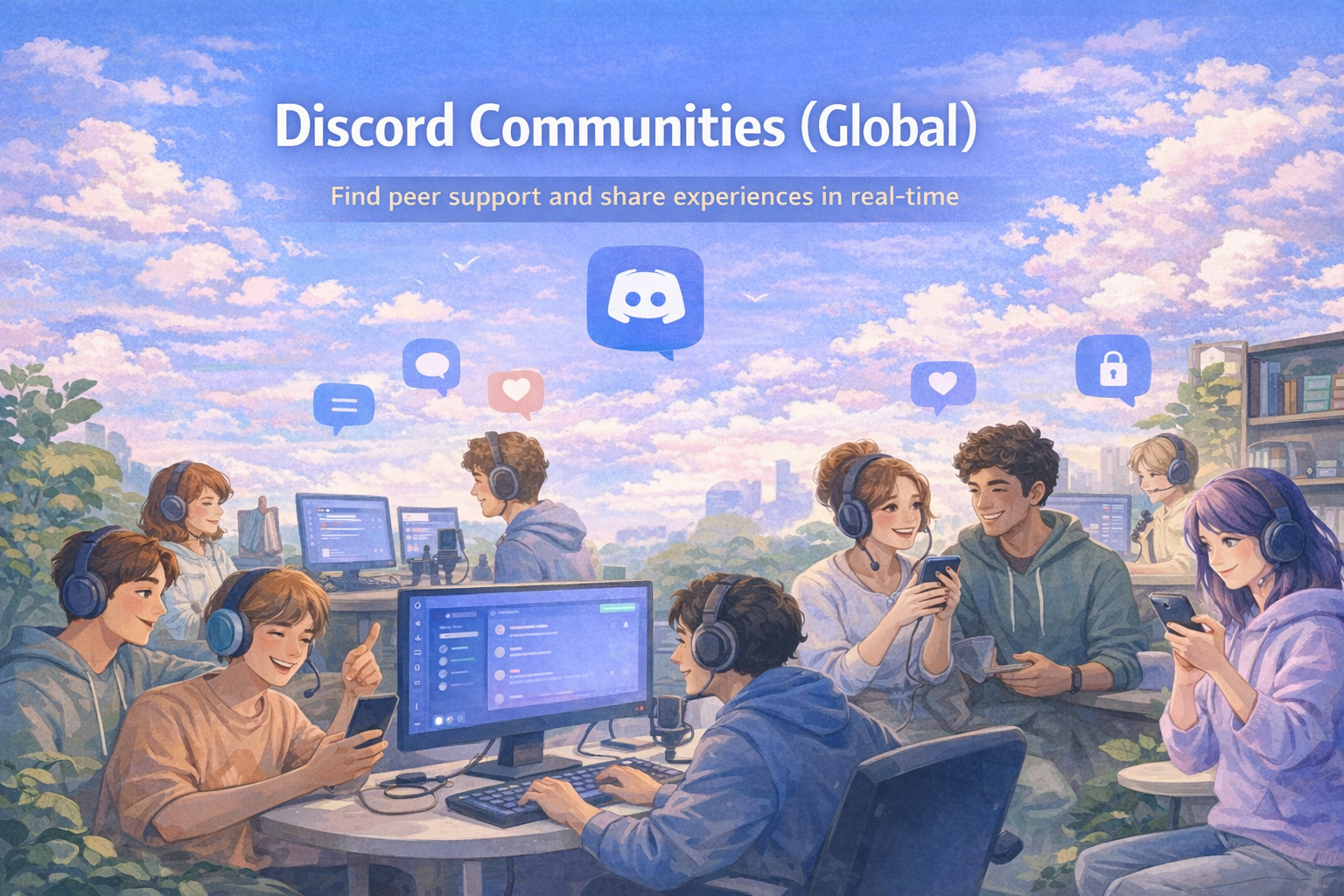
Discord Communities (Global)
Discord communities are often organised into servers with channels for different topics, making them useful for ongoing discussion, support, identity-based spaces, shared experiences, and lower-pressure real-time connection.
Some servers feel structured and supportive, while others can feel busy or overwhelming. This page gives an overview of the types of Discord communities people may look for and what to keep in mind before joining.
Explore Discord community categories
Search by topic or use the quick links below to move through the page more easily.
Neurodivergent Discord communities
Autism and broader neurodivergent servers
These may include channels for autism, ADHD, AuDHD, sensory needs, masking, routines, daily life, and identity-based support.
Lower-pressure community spaces
Some servers offer quieter channels, interest-based spaces, or more structured support for people who prefer a slower or gentler social pace.
Peer connection and belonging
Discord can work well for people looking for conversation, shared interests, and a stronger sense of ongoing community connection.
Mental health Discord communities
Live support and check-in spaces
Some servers provide gentle check-ins, peer support, and conversation spaces where people can talk through what they are feeling in real time.
Wellbeing and coping communities
These may focus on coping tools, grounding, encouragement, mood support, and shared recovery journeys.
Condition-based discussion servers
Some communities centre around topics such as anxiety, depression, trauma, OCD, eating disorders, or emotional wellbeing.
Learning support Discord communities
Study support and learning communities
These may include spaces for dyslexia, dyscalculia, study help, executive function support, and learning difference discussions.
Parent and educator spaces
Some servers support caregivers, parents, and educators looking for ideas, shared experiences, and practical encouragement.
Everyday support channels
People often use Discord to ask questions, swap strategies, and support one another through day-to-day learning challenges.
General support communities
Broad peer support servers
These can be useful if you want shared discussion, encouragement, and community interaction without needing a highly specific group straight away.
Identity and life-stage support
Some spaces are built around identity, belonging, age, relationships, or broad support experiences rather than a single condition.
Starting where you feel comfortable
General servers can be a good starting point while you work out what kind of support space feels safest and most helpful for you.
Things to consider before joining
- Check whether the server has rules, moderation, and clear boundaries
- Notice how fast-moving the chats feel and whether that suits you
- Take time to read first before sharing personal information
- Mute or step away from channels that feel too intense or overwhelming
- Leave any server that feels unsafe, harmful, or draining