
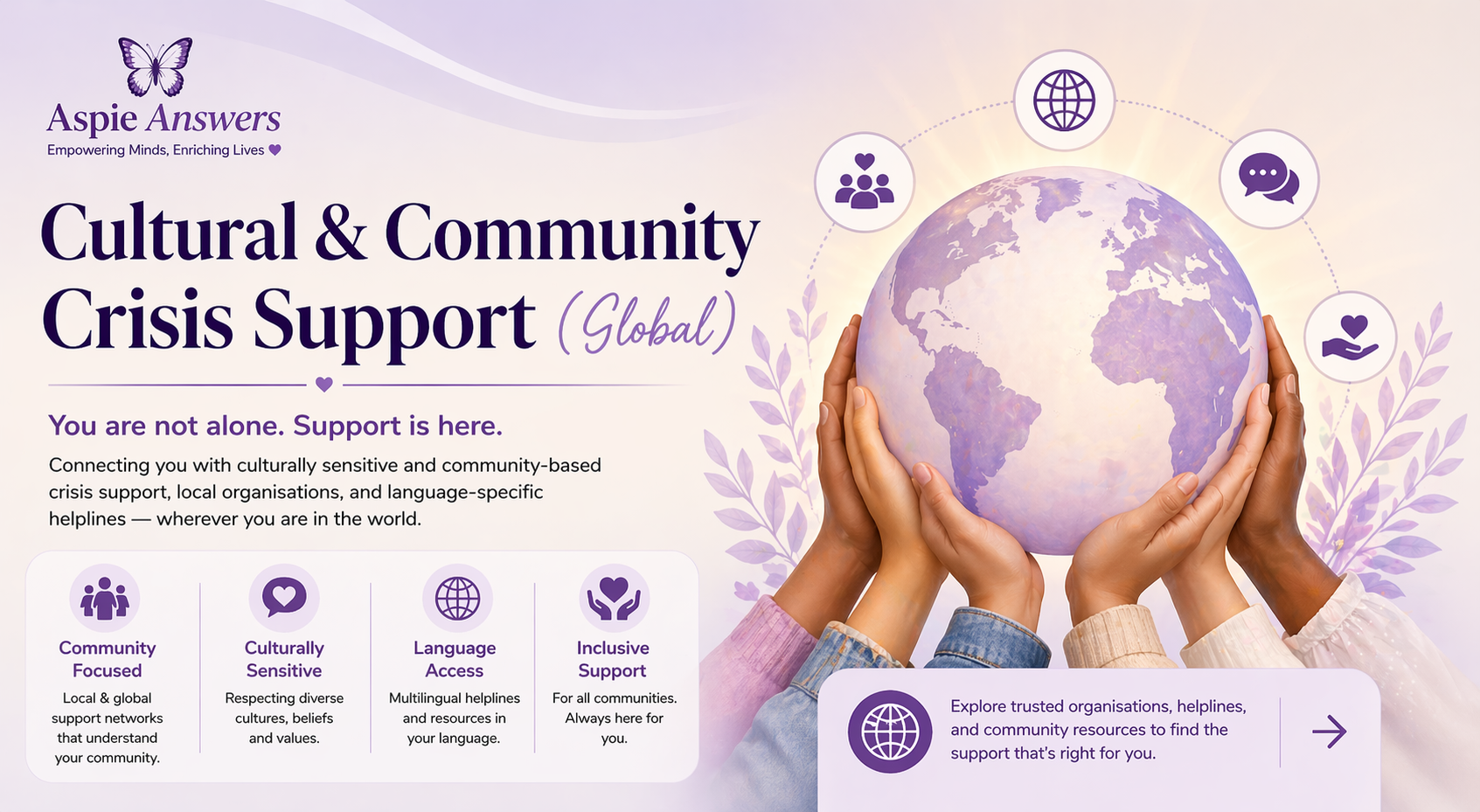
Cultural & Community Crisis Support (Global)
This page is here to help people find crisis support that feels safer, more respectful, and more relevant to their lived experience. For many people, support works best when it understands culture, language, identity, family structure, community values, and local realities.
Below you’ll find community-based pathways, culturally responsive support options, multilingual access ideas, and space to connect with pages that may better match your needs.
Find Support That May Fit Better
Use the search box or category filter below to quickly narrow down the support options on this page.
Tip: this section is especially useful once you start adding your final internal links and trusted support resources.
Local Community Support Organisations
Community organisations can sometimes offer support that feels more approachable, relational, and grounded in real local needs. These may include local centres, support networks, outreach teams, and community-led services.
Culturally Responsive Crisis Support
Some services are designed to better understand cultural values, community expectations, intergenerational needs, migration experiences, and the importance of culturally safe communication during distress.
Multilingual Helplines & Interpreting Access
Language matters in crisis. Support can feel more accessible when people are able to communicate in their own language or use services that offer translated information or interpreting support.
Faith-Based & Spiritual Support Pathways
For some people, faith, spirituality, and trusted belief communities are an important part of feeling safe, understood, and supported. This can include pastoral care, chaplaincy, or culturally respectful faith-linked support.
Inclusive Support for Diverse Communities
Inclusive support recognises that people may need crisis pathways that respect disability, neurodivergence, sexuality, gender, race, migration experience, or other parts of identity that shape how safe support feels.
Family, Elders, Whānau & Trusted Networks
In some cultures and communities, support is not just individual. Family systems, elders, carers, whānau, and trusted community people may play an important role in helping someone reach safety and support.
What Community-Based Crisis Support Can Look Like
Community support does not always look the same everywhere. In some places, help may come through formal organisations. In others, it may come through local leaders, cultural services, support workers, faith communities, or trusted networks.
Examples of support that may help
- Community-led mental health or wellbeing organisations
- Refugee, migrant, ethnic, or Indigenous support services
- Cultural liaison workers or support navigators
- Youth, family, women’s, men’s, or elder community support groups
- Faith-based organisations offering practical or emotional support
- Local helplines, peer networks, or outreach teams
Why this matters
People are more likely to reach out when support feels understandable, respectful, and safe. A service that understands community values, communication styles, or cultural experiences can sometimes reduce fear and help people feel less alone.
This page is designed to help bridge that gap by pointing people toward support that may feel more familiar and more responsive.
Language, Communication & Access
Sometimes the biggest barrier is not willingness to get help — it is whether the help is understandable, available in the right format, or respectful of how someone communicates.
Translated Information
Add trusted services or guides here that offer translated crisis information, multilingual pages, or downloadable materials in different languages.
Interpreter or Relay Access
Some services may provide access to interpreters, communication assistants, relay support, or alternative contact methods that make help easier to reach.
Accessible & Flexible Communication
You may later wish to add links for text/chat options, simplified-language resources, culturally adapted information, or communication-friendly support pages.
A Soft Place to Start
Reaching out can feel hard, especially when support has not felt safe, accessible, or respectful in the past. You do not have to find the perfect page immediately. Even finding one relevant step can be enough to begin.
If you are not sure where to go next
Start with the page that feels closest to your experience. You can then move between community, identity, faith, neurodivergent, disability, or location-based pages using the links above as your hub grows.