
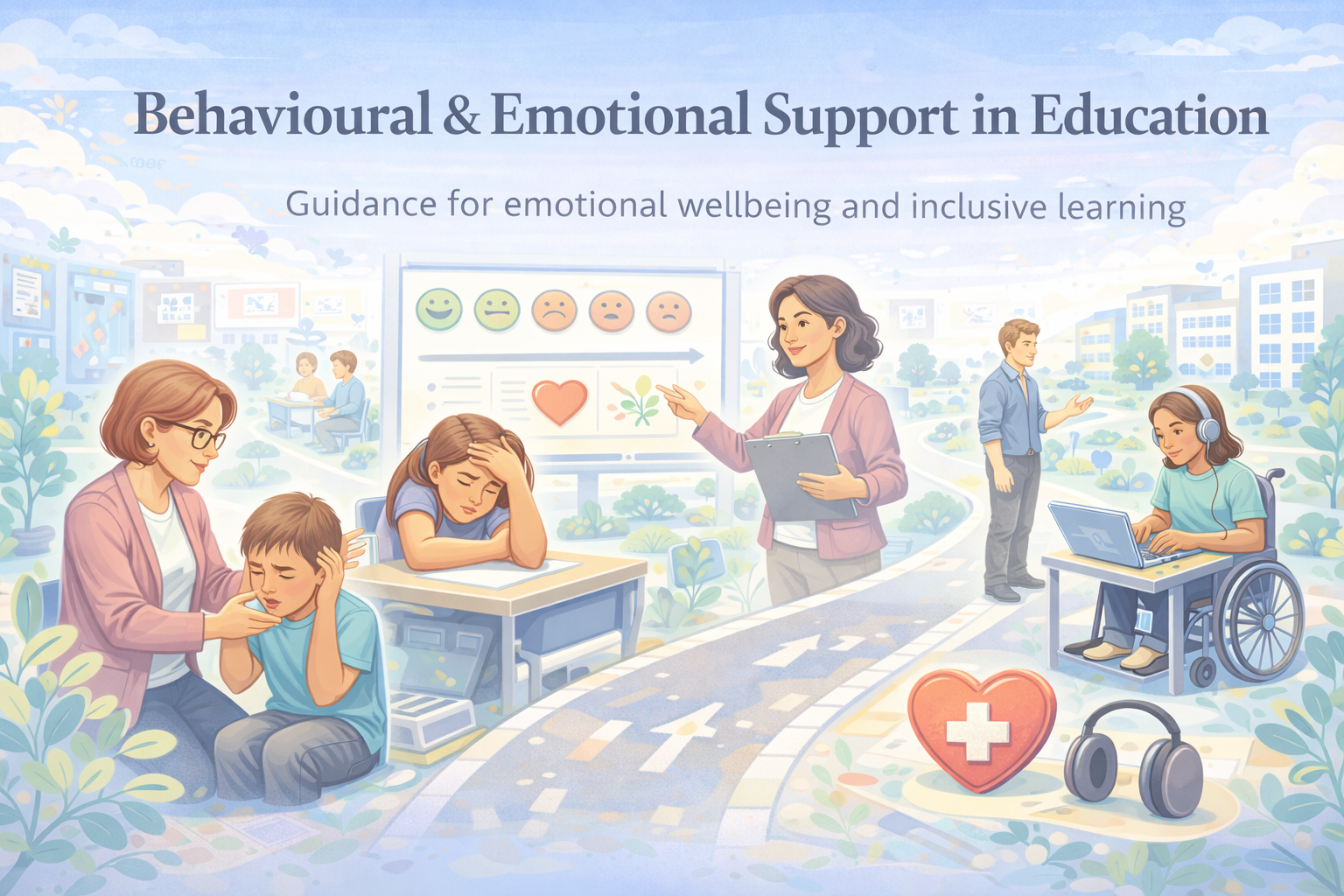
Behavioural & Emotional Support in Education

Behavioural and emotional support in education - Aspie Answers banner

Behavioural & Emotional Support in Education

Practical ways to support regulation, reduce overwhelm, and build safe learning environments — for neurodivergent students and learners with diverse needs.

Behaviour and emotions are often a form of communication — especially when a student is overwhelmed, anxious, overstimulated, or struggling to access learning. This page focuses on supportive, respectful strategies that protect dignity, improve outcomes, and help schools understand what’s happening under the surface.

Note: This is a general guidance page (worldwide). Country-specific rights, school systems, and referral pathways will be added later.

Understanding Behaviour (What it might be saying)

“Behaviour” is often a stress response — not a character flaw. A supportive approach asks: What happened? What need isn’t being met? What would help next time?

Common underlying causes:
  • Sensory overload (noise, lights, touch, crowds, transitions)
  • Anxiety, demand avoidance, or fear of failure
  • Communication differences (not having words in the moment)
  • Executive functioning overload (too many steps / unclear instructions)
  • Social stress, bullying, masking fatigue, or burnout

Support Strategies That Protect Dignity

These strategies aim to reduce stress, prevent escalation, and build trust over time.

🧩 Predictability & Structure

Visual schedules, clear expectations, “what happens next”, and consistent routines.

Coming soon →

💬 Co-regulation & Calm Communication

Low voice, fewer words, calm body language, and connection before correction.

Coming soon →

🧠 “Lagging Skills” Lens

Focus on missing skills (flexibility, frustration tolerance) rather than punishment.

Coming soon →

✅ Adjust the Task

Reduce steps, provide templates, allow alternative formats, offer movement breaks.

Coming soon →

🧯 De-escalation Plans

Agreed scripts, safe exit options, calm spaces, and a recovery plan after incidents.

Coming soon →

🌱 Restorative Repair

After calm returns: repair, reflect, and plan support — no shame-based consequences.

Coming soon →

Sensory & Regulation Supports

Regulation supports help students stay within their “window of tolerance” so learning is possible.

Quick wins schools can trial:
  • Quiet corner / calm space (not used as punishment)
  • Movement breaks and flexible seating
  • Headphones, sunglasses, or lighting adjustments
  • “Help” cards / non-verbal request options
  • Break passes, transition warnings, and choice boards

Working With Teachers & School Staff

Collaboration works best when everyone agrees on the goal: safety + access to learning. If you’re a parent/carer or student, it can help to bring a one-page summary of needs, triggers, and supports.

Try saying:
  • “When stress rises, behaviour changes. Here’s what helps early.”
  • “We’re aiming for support strategies, not punishment.”
  • “Let’s agree on a plan for transitions and overload.”

Tools & Templates (to add next)

These will be added as downloadable PDFs and printable guides (coming soon):

📄 Regulation Support Plan (1-page)

Triggers, early signs, what helps, and what to avoid.

Coming soon →

🧾 Incident Reflection Sheet

Reflect after calm returns: what happened, what helped, what to try next time.

Coming soon →

🧩 Classroom Adjustments Checklist

Practical accommodations teachers can trial and review.

Coming soon →
Disclaimer: This page is educational and not a substitute for professional advice, diagnosis, or crisis support. If a student is at risk of harm, contact local emergency services or a crisis helpline in your region.